
Walk downstairs for a moment. Take a look around. What do you see? Maybe a few dusty boxes, that old treadmill you swore you’d use, holiday decorations crammed into corners. For many of us, basements are “catch-all” spaces, out of sight, out of mind.
But here’s the thing: that forgotten square footage might be the most valuable space in your home.
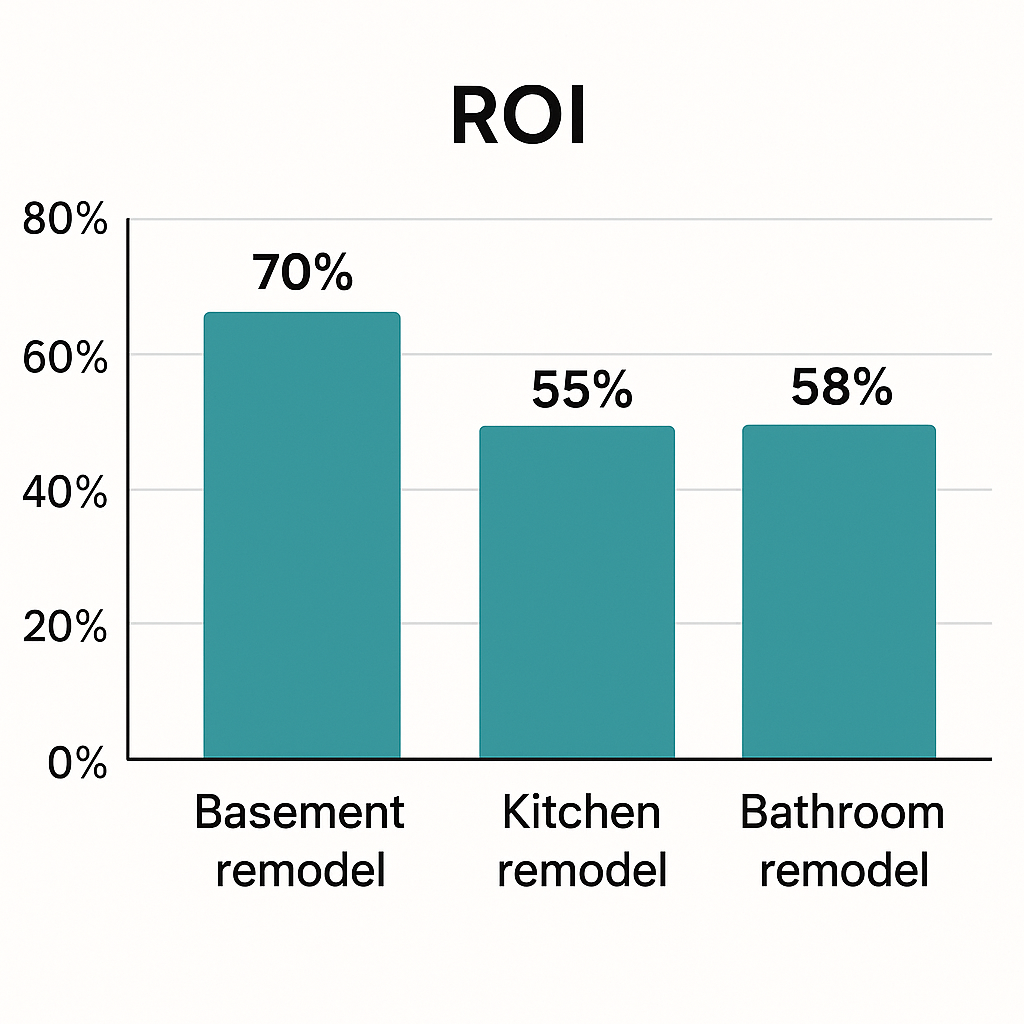
In 2025, homeowners across Long Beach, and surrounding areas are transforming basements into cozy family lounges, income-generating guest suites, and jaw-dropping home theaters. Why? Because remodeled basements can recoup up to 70% of their cost and instantly make a house feel bigger, brighter, and more functional.
And you don’t need a six-figure budget to start. Over the next few sections, we’ll walk through real, achievable basement transformations — from weekend-refresh ideas to full-scale, HGTV-level makeovers.
Thinking about remodeling? Material costs are climbing, starting sooner could save you thousands.
Why Basement Remodeling Makes Sense Now
Basement remodeling isn’t about “adding a room.” It’s about changing the way you live.
- Boost resale value: Homes with finished basements sell faster, and for more.
- Expand your living space: Whether it’s a home gym, a game room, or a sunlit home office, your basement can flex to fit your family’s needs.
- Future-proof your home: Need an in-law suite? An Airbnb-ready space? A safe playroom? Remodeling now creates options for later.
Ready to explore what your basement could become? Schedule a free, no-pressure consultation with our local team today.
2. How Much Does It Cost to Remodel a Basement in 2025?
Let’s be honest, before you imagine movie nights or Airbnb income, you’re wondering: “What’s this going to cost me?”
The truth? In 2025, basement remodel costs swing widely based on your goals, your home’s condition, and how custom you want to get. But here’s a way to break it down so you know where you stand:
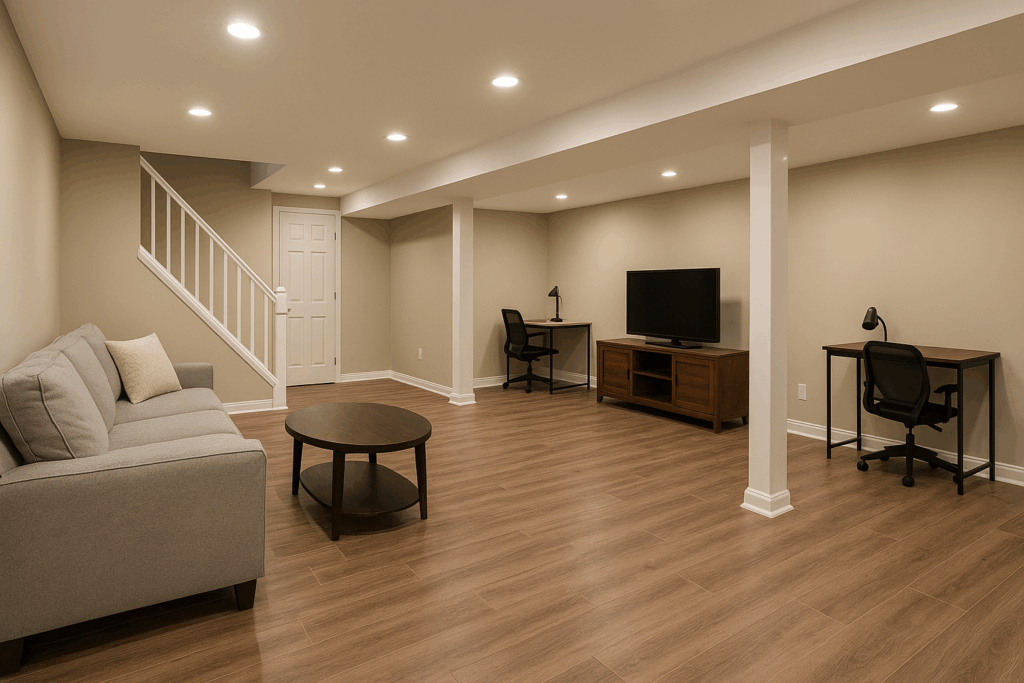
If You Just Want It Livable ($5K–$15K)
This is your weekend-warrior stage, making the basement a place you can actually enjoy.
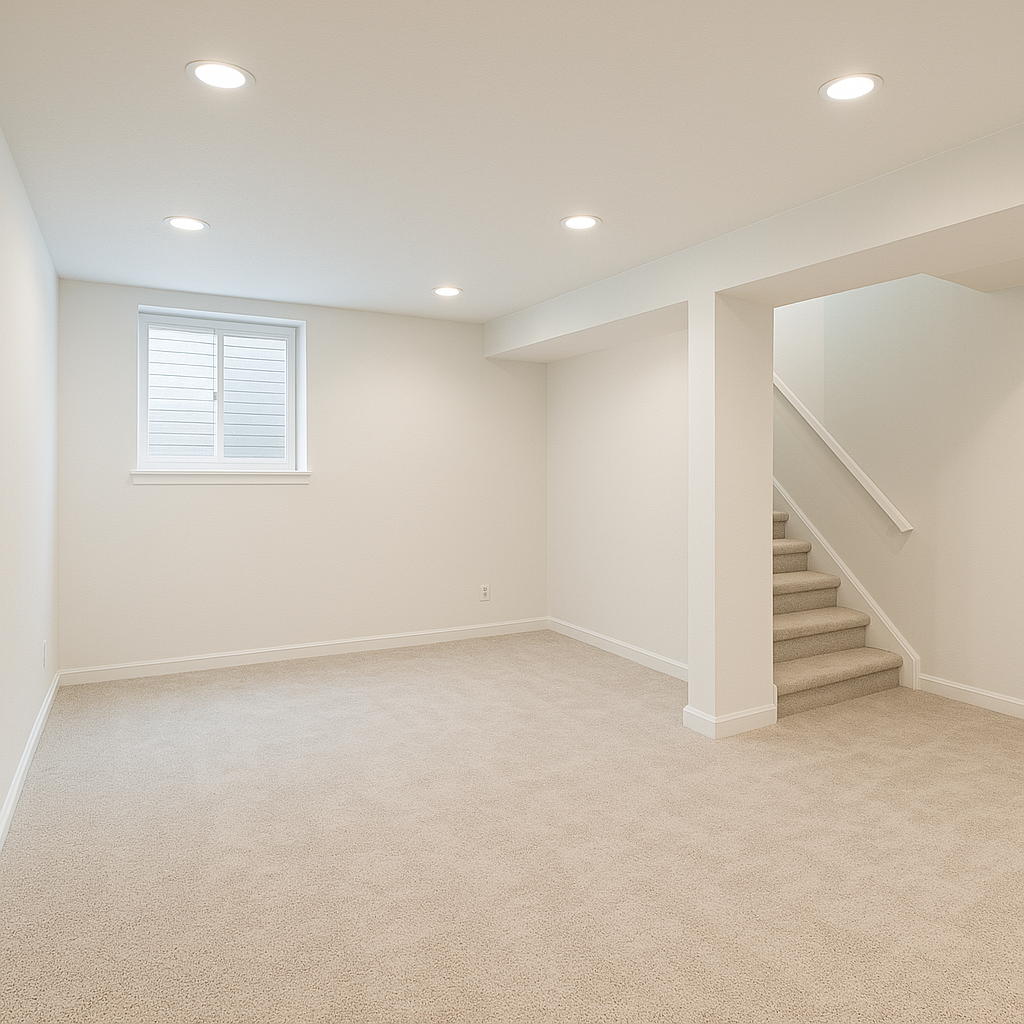
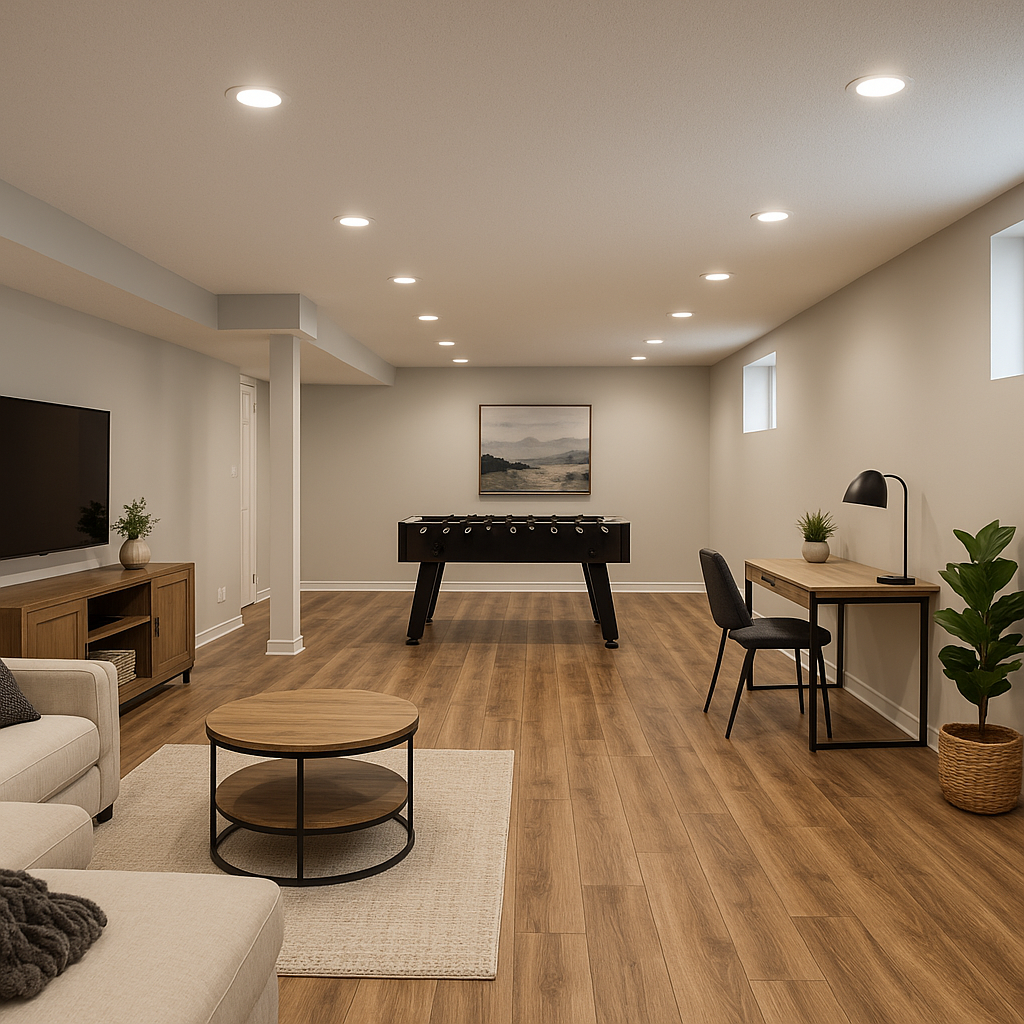
- Freshen it up: A coat of light-reflective paint (whites, pale grays) instantly brightens the space. Add LED recessed lights to cut the cave-like feel.
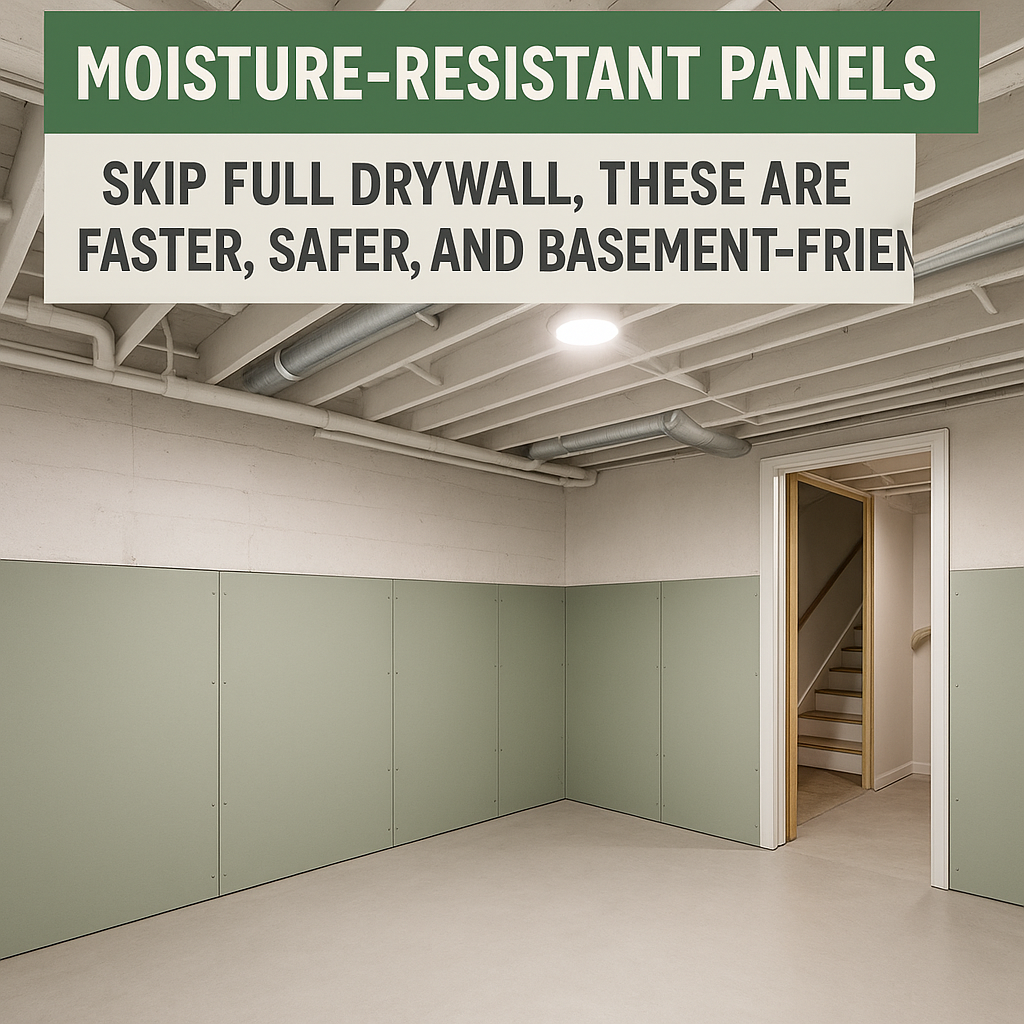
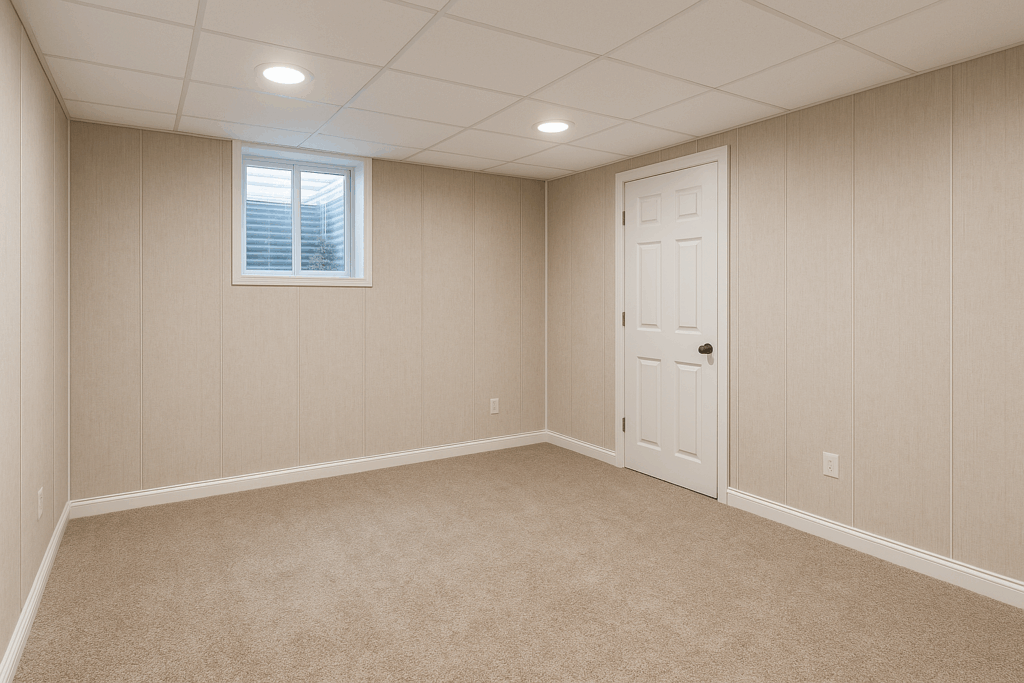
- Moisture-resistant panels: Skip full drywall, these are faster, safer, and basement-friendly.
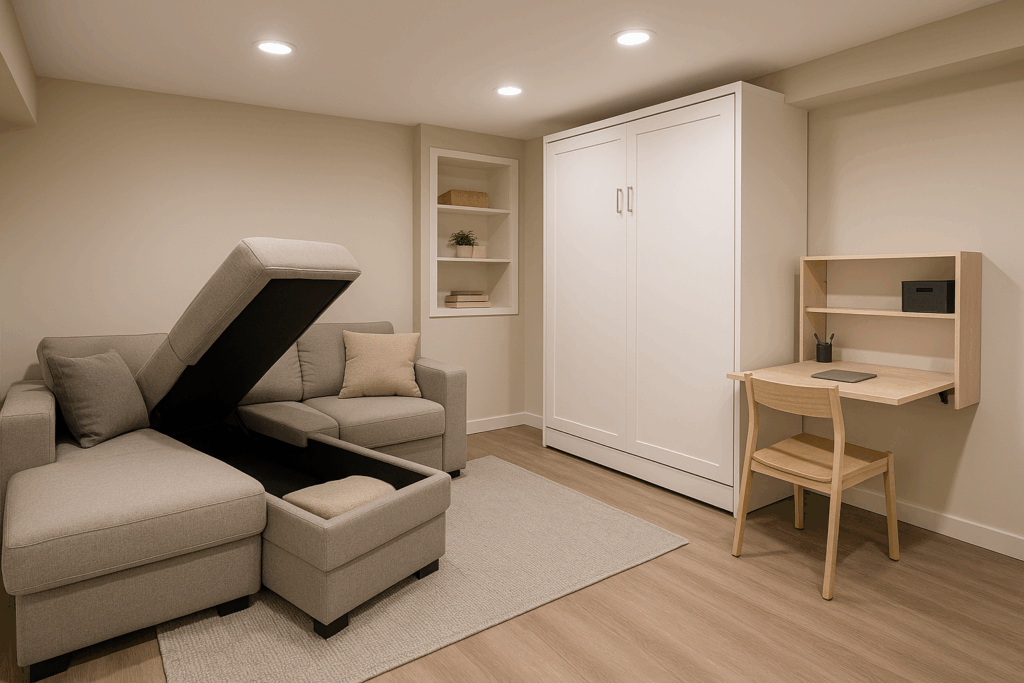
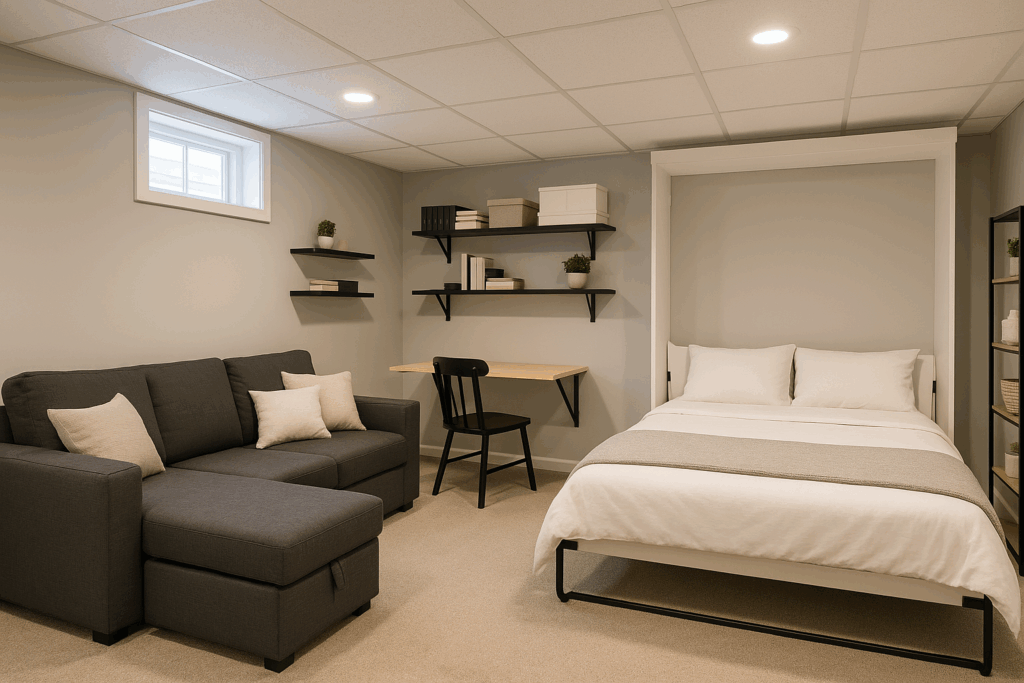
- Smart furniture choices: Sectionals with hidden storage, Murphy beds, fold-out desks — multifunctional pieces that pull double-duty.
- Peel-and-stick flooring: An easy DIY win. Looks like wood, feels durable, costs little.
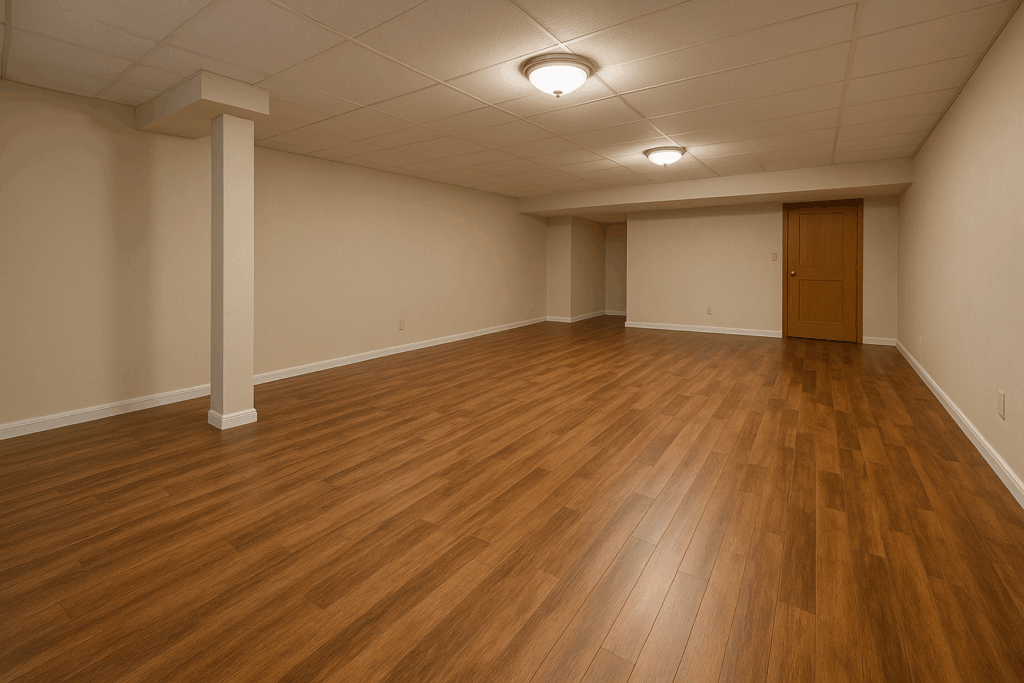
If You Want Comfort & Function ($20K–$45K)
This is where most homeowners in Long Beach land, creating a basement that feels like part of the home, not an afterthought.
- Open layouts: Take down non-load-bearing walls to make it airy and flexible.
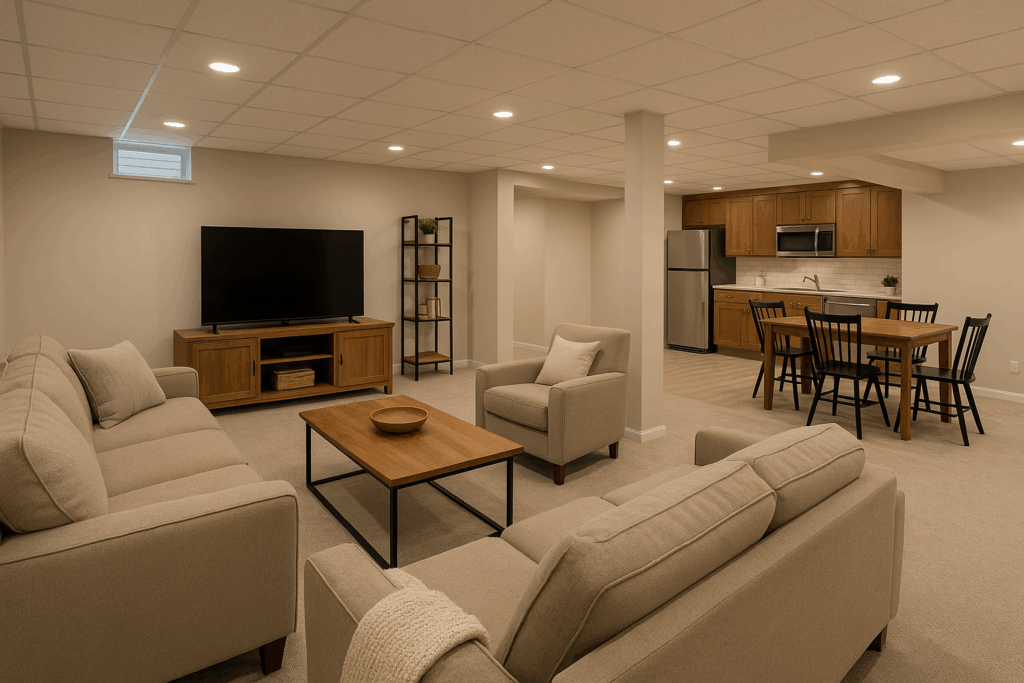
- Egress windows: Adds natural light, boosts safety, and meets code for bedrooms.
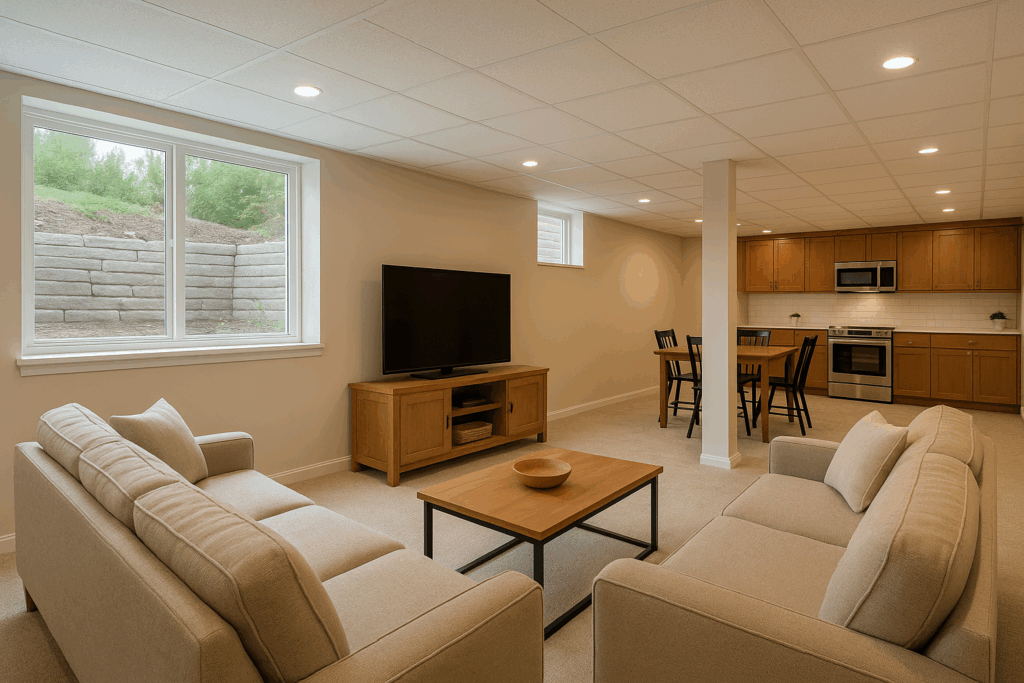
- Wet bars & mini kitchens: Transform the basement into a full-blown entertainment or guest space.
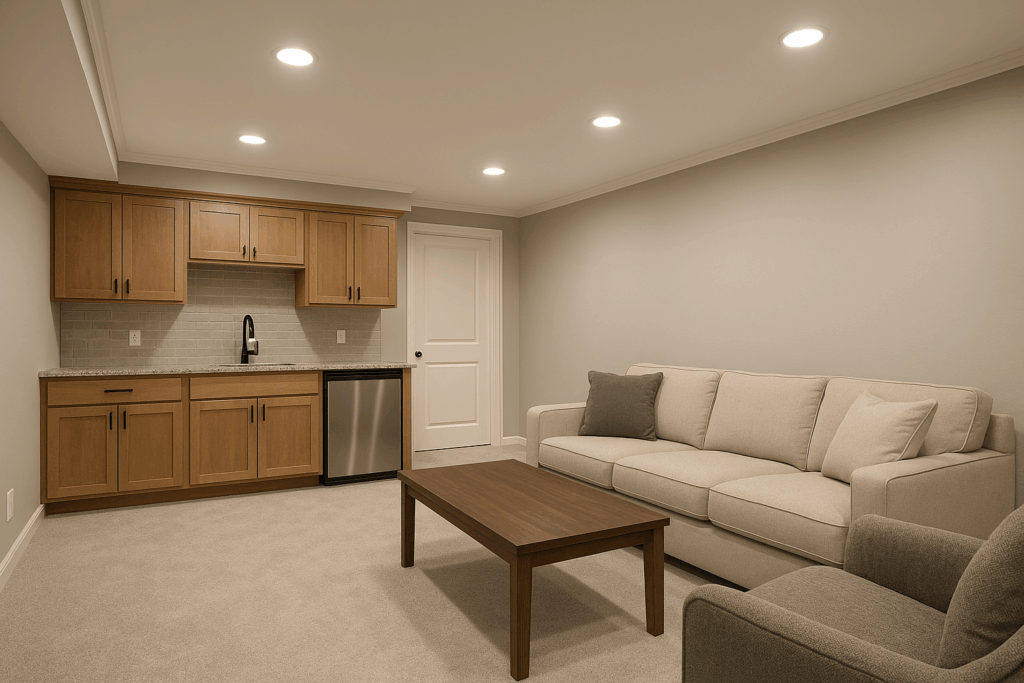
- Durable flooring: Waterproof vinyl planks or engineered hardwood for a polished, long-lasting finish.
If You’re Going All-In ($75K+)
This is where your basement becomes the showpiece of your house.
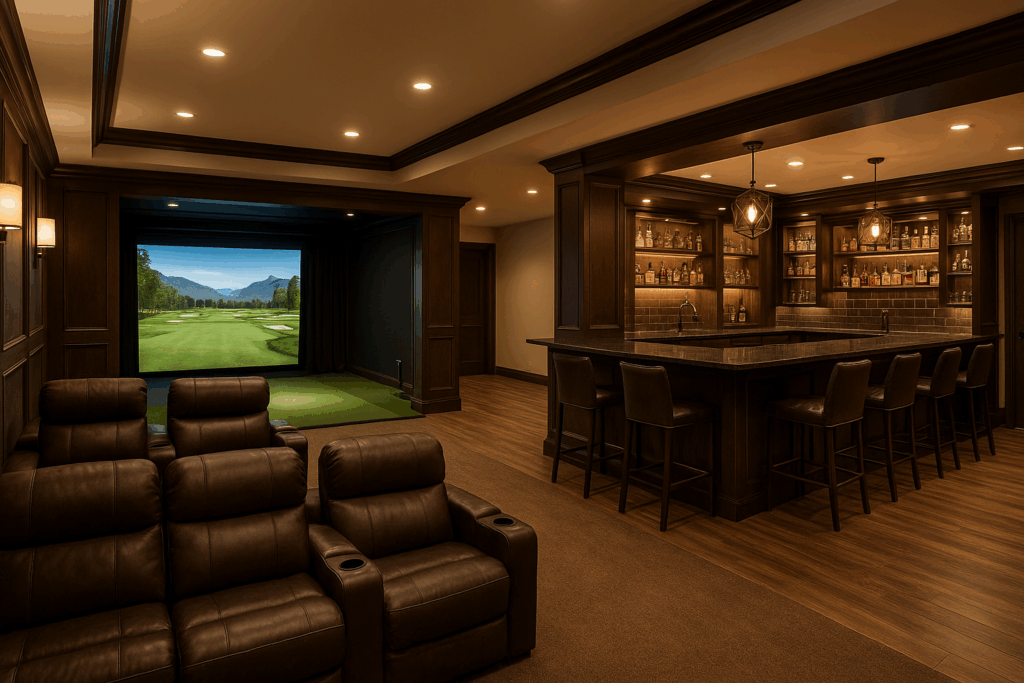
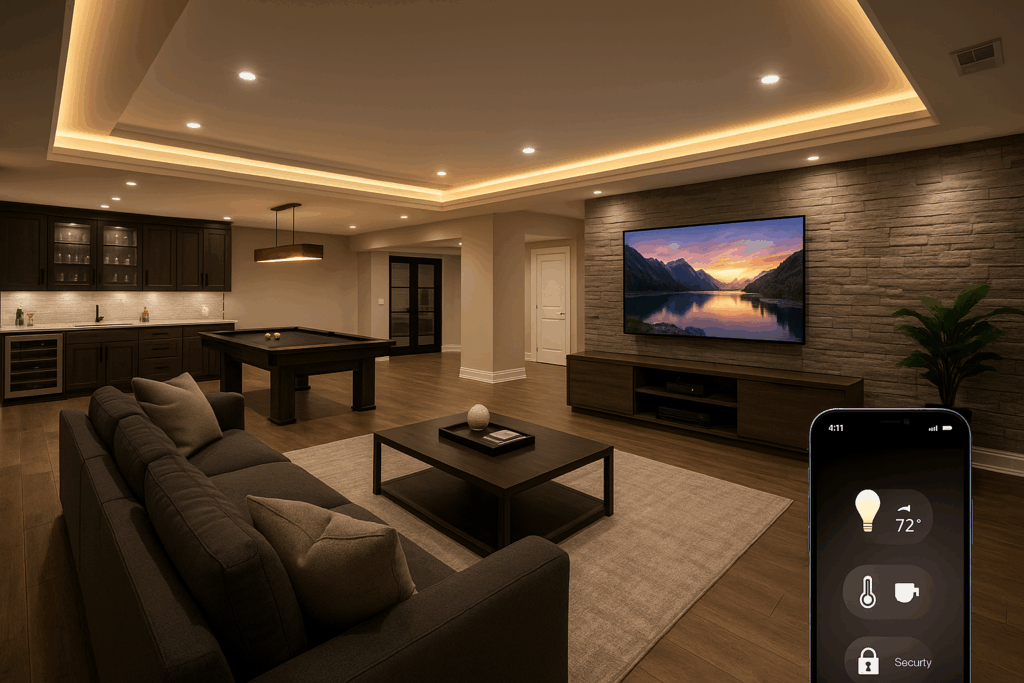
- Custom entertainment zones: Think tiered-seating theaters, speakeasy-style bars, or golf simulators.
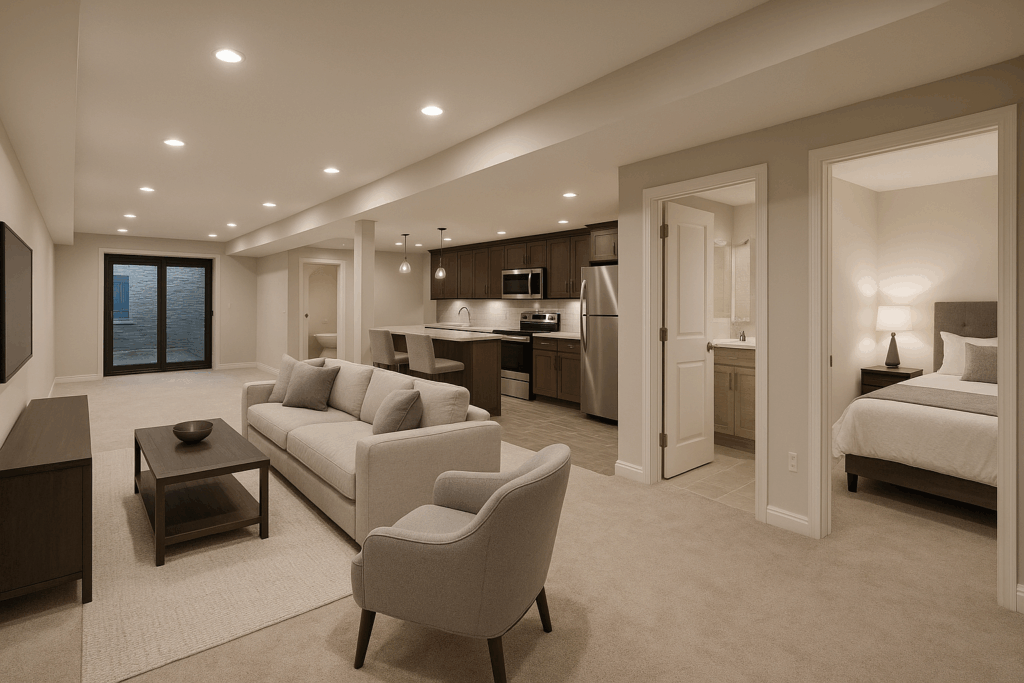
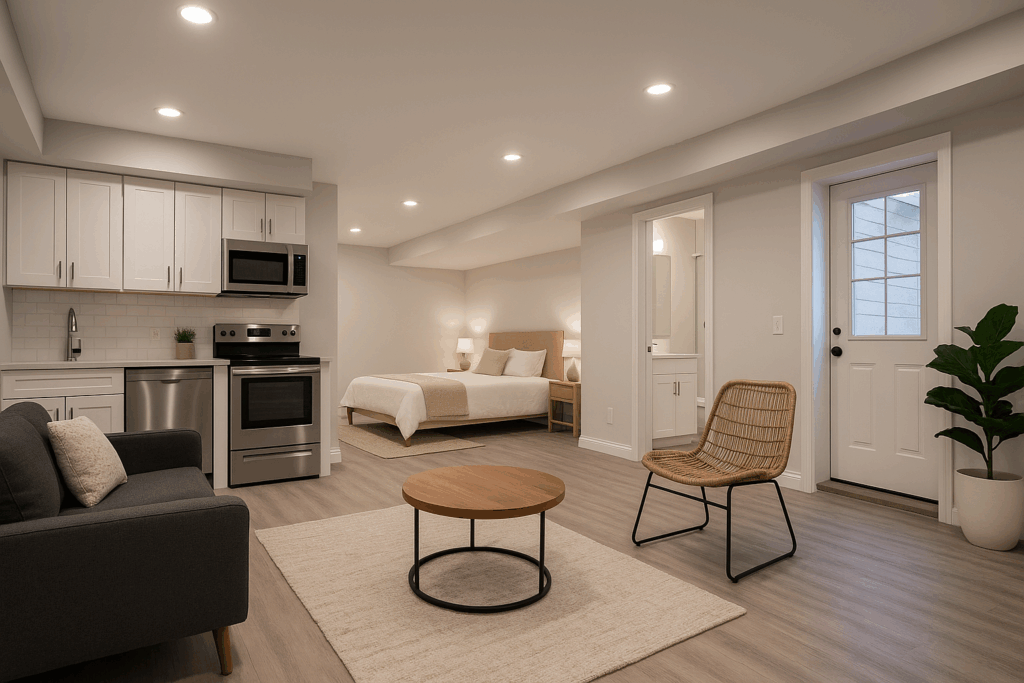
- In-law or Airbnb suites: Bedrooms, bathrooms, even private entrances for multi-gen living or passive income.
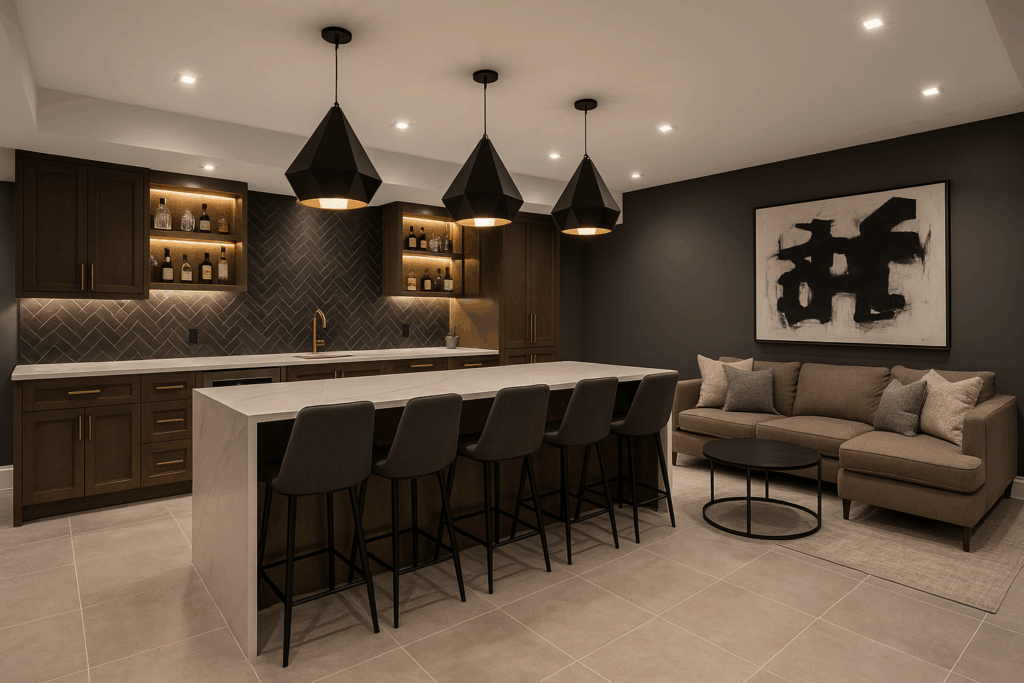
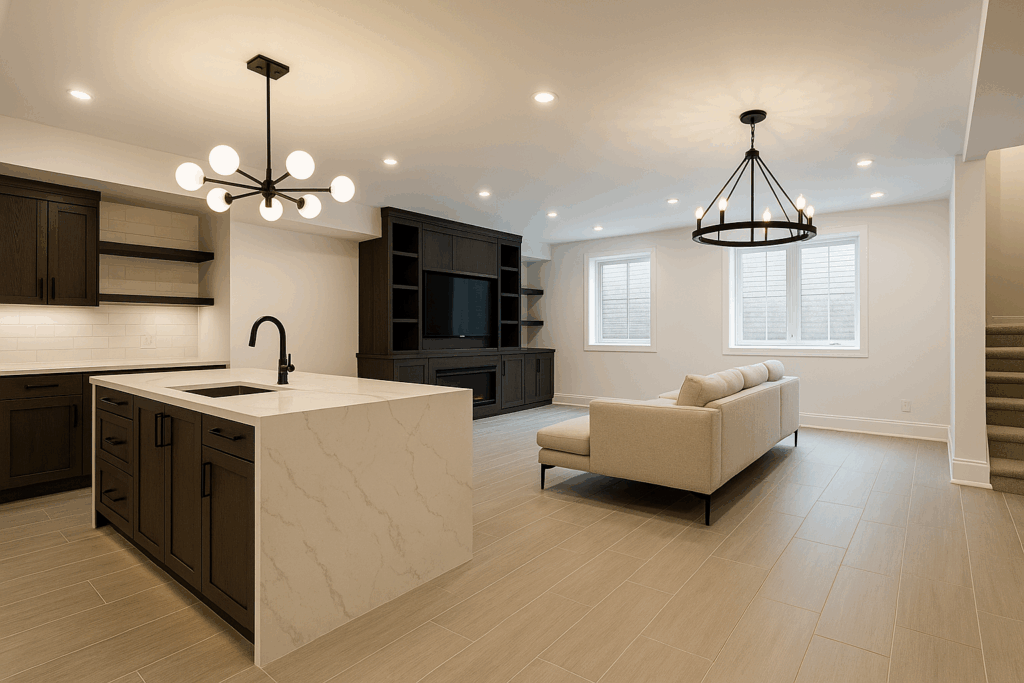
- Designer finishes: Quartz counters, heated flooring, custom cabinetry, bold lighting — magazine-worthy.
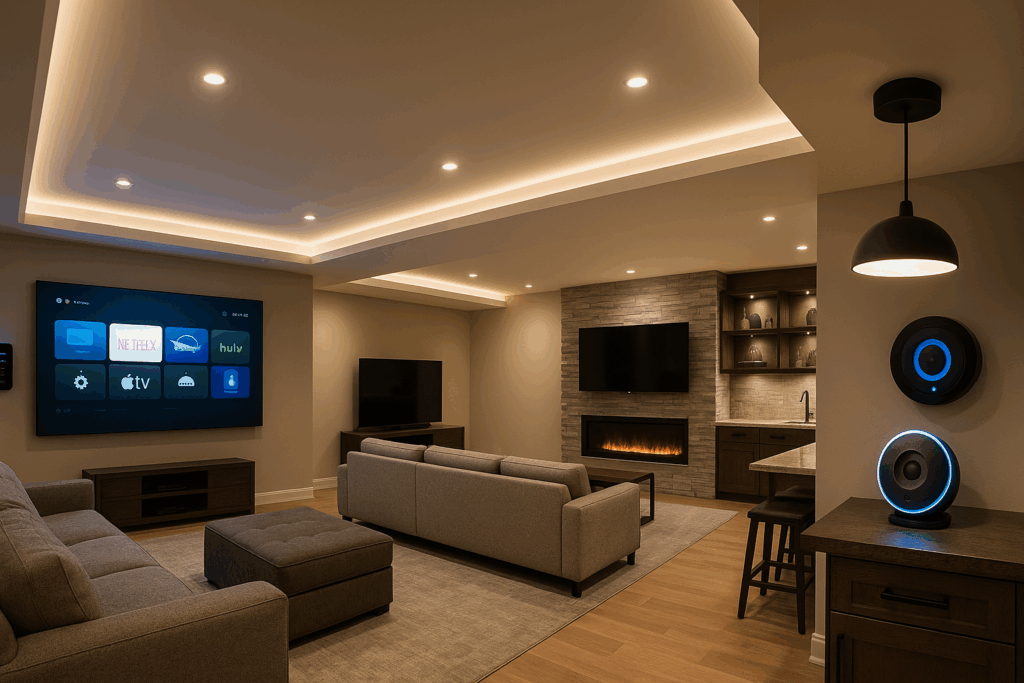
- Smart tech: Lighting, temperature, and security controlled from your phone.
Where the Money Really Goes:
- Waterproofing & Insulation: $3,000–$10,000 (don’t skip this).
- Flooring: $2,500–$8,000.
- Electrical & Lighting: $2,000–$7,000.
- Plumbing: $3,000–$12,000 for baths/bars.
- Permits & Code: $500–$2,500.
Material and labor costs are projected to climb again this year. Starting sooner could save you thousands.
3. Basement Remodeling Ideas by Budget
No two basements, or budgets, are the same. Whether you’re just trying to make it livable or ready for a full-blown HGTV reveal, there’s a way to make it happen without feeling overwhelmed.
If You’re Working with $5K–$15K: Small Budget, Big Impact
This is the “let’s finally do something with this space” phase.
- Light therapy: Fresh paint in soft whites or airy grays, paired with LED recessed lighting, can erase that cave-like feeling in a weekend.
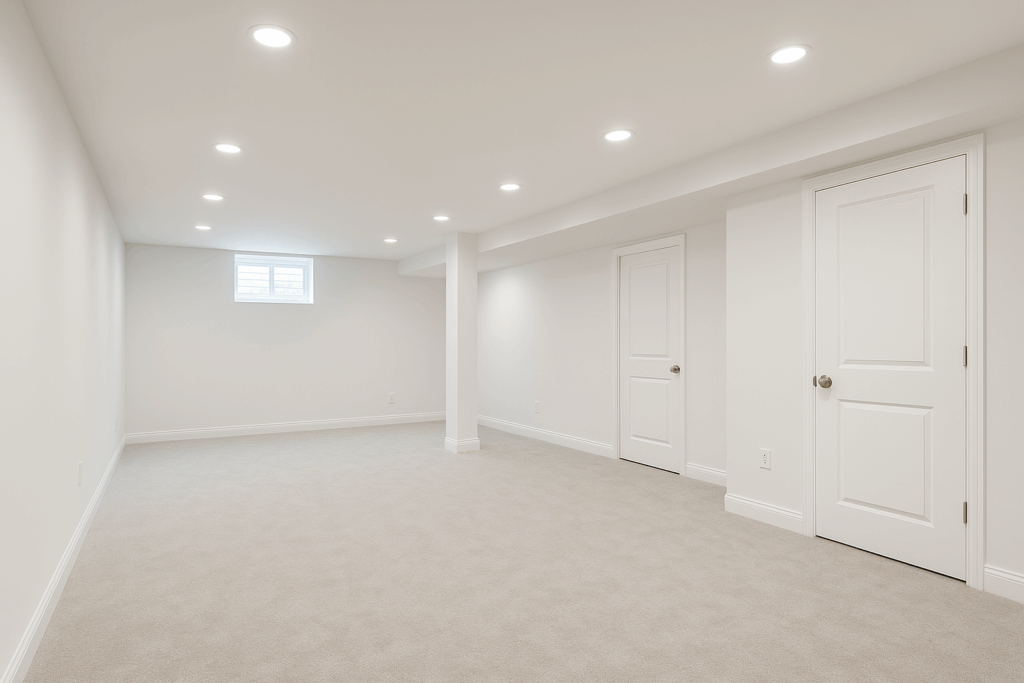
- Basement-friendly walls: Forget drywall nightmares, moisture-resistant wall panels install faster, fight dampness, and save cash.
- Furniture that earns its keep: Storage sectionals, Murphy beds, fold-out desks, multifunctional pieces make a small budget go further.
- DIY flooring wins: Peel-and-stick vinyl planks are affordable, waterproof, and surprisingly convincing (you’ll forget it’s not real hardwood).
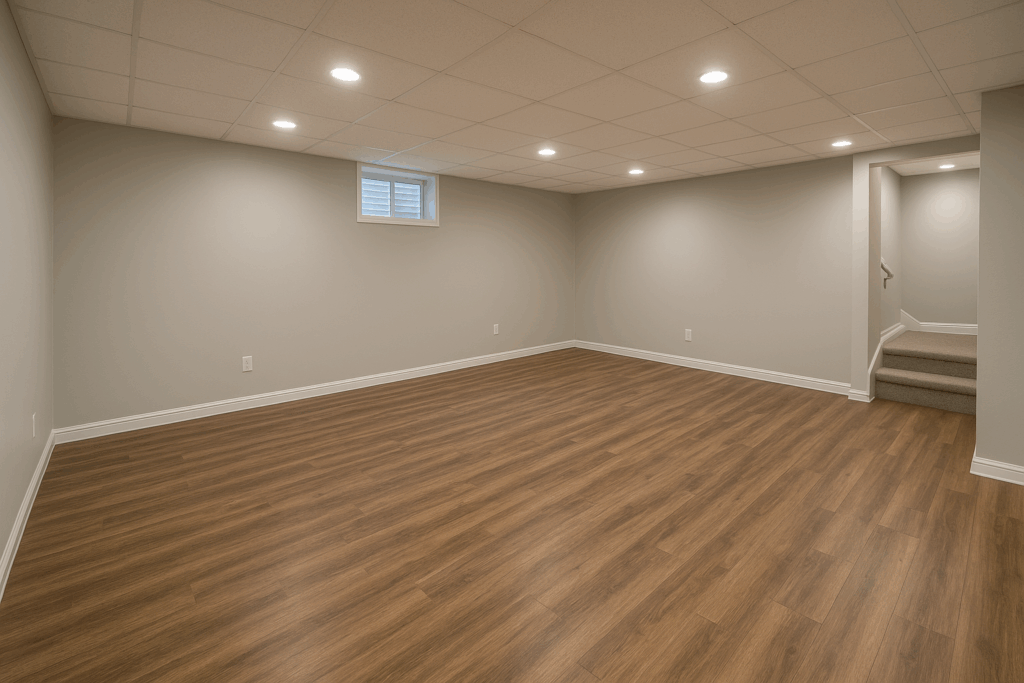
If You’ve Got $20K–$45K: The Comfortable, Multi-Use Zone
This is where your basement starts feeling like a real extension of your home.
- Open up the floor plan: Remove non-load-bearing walls for a bigger, brighter lounge or rec room.
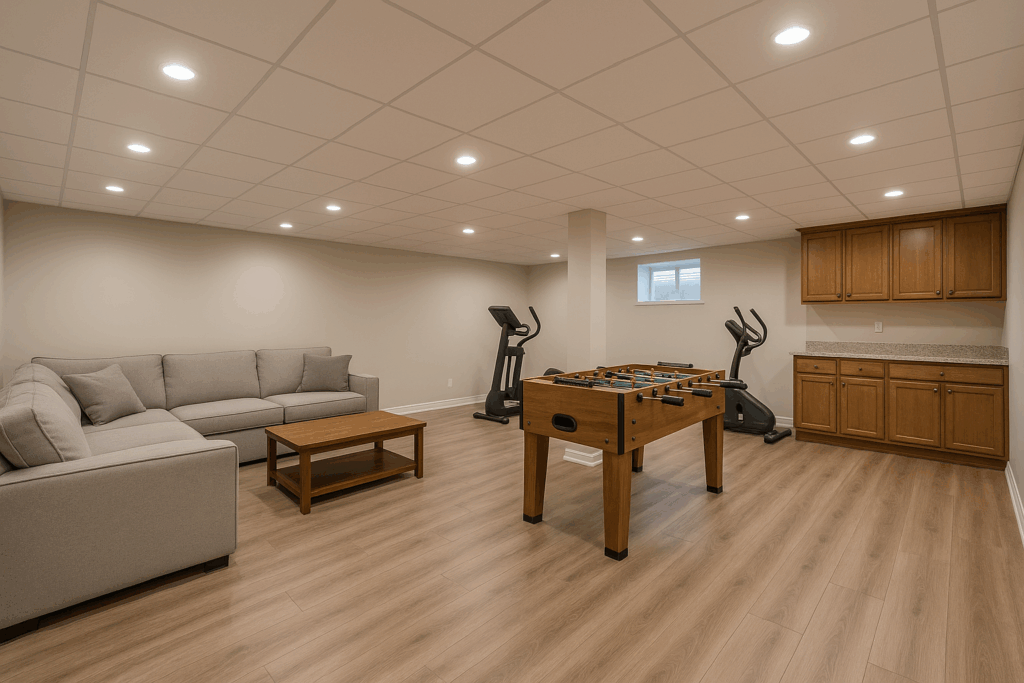
- Let the light in: Egress windows make a world of difference, more daylight, more safety, and now it’s a legal bedroom.
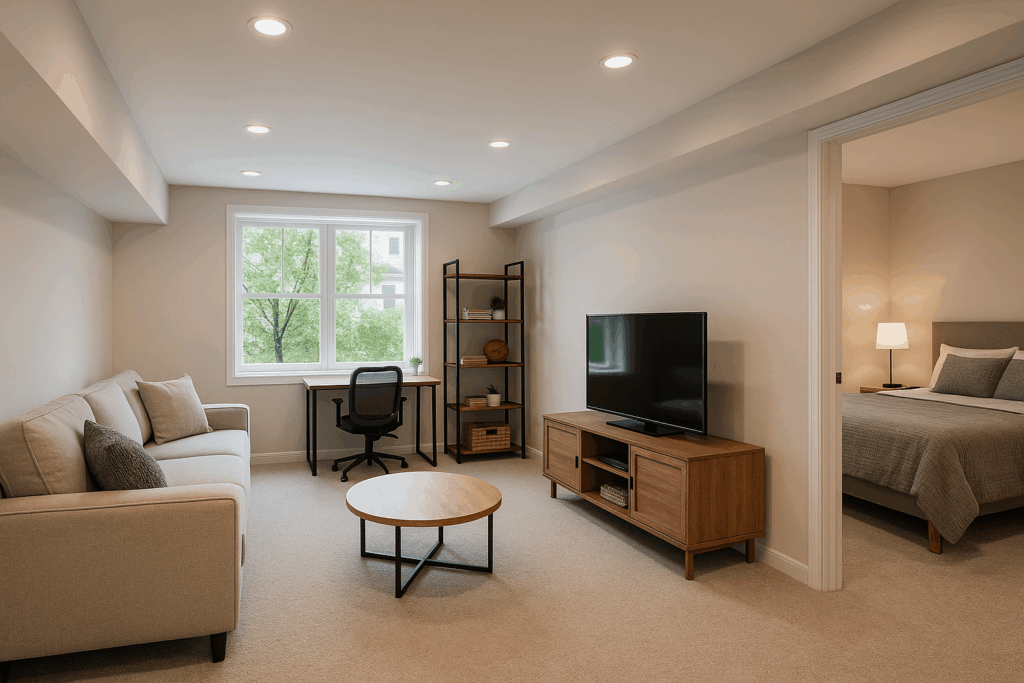
- Add some hospitality: A compact wet bar or kitchenette turns the basement into a guest-ready or party-friendly zone.
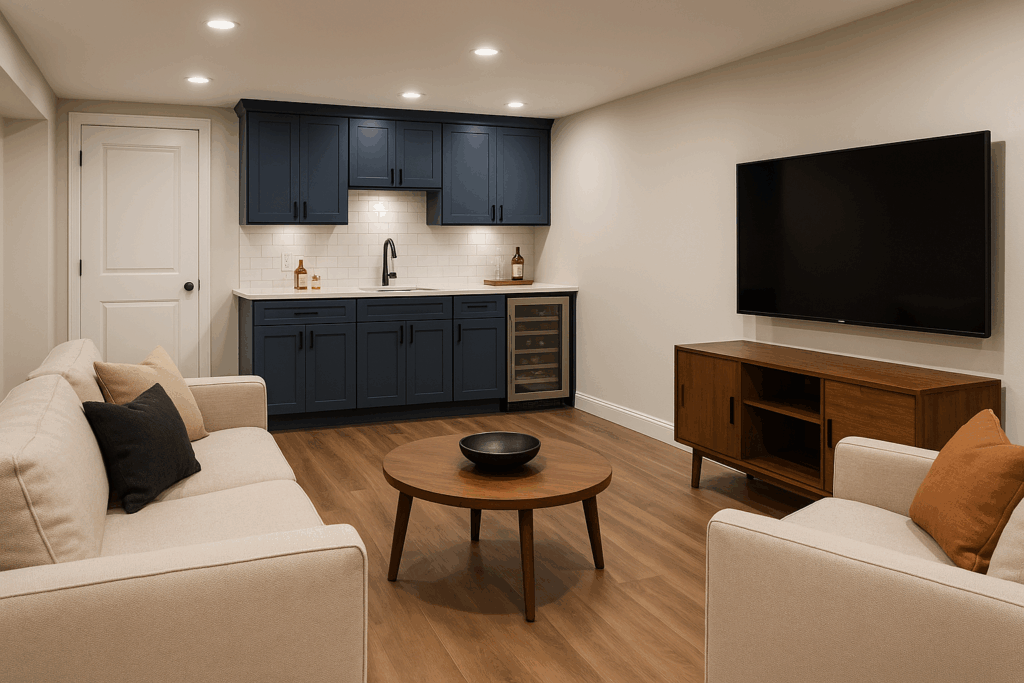
- Durable flooring upgrade: Luxury vinyl plank or engineered hardwood for a high-end look without the maintenance headache.
If You’re Going All-In: $75K and Beyond
This is where basement remodels get jaw-dropping.
- Custom entertainment: Imagine a tiered-seating home theater, speakeasy bar with hidden entrance, or even a golf simulator.
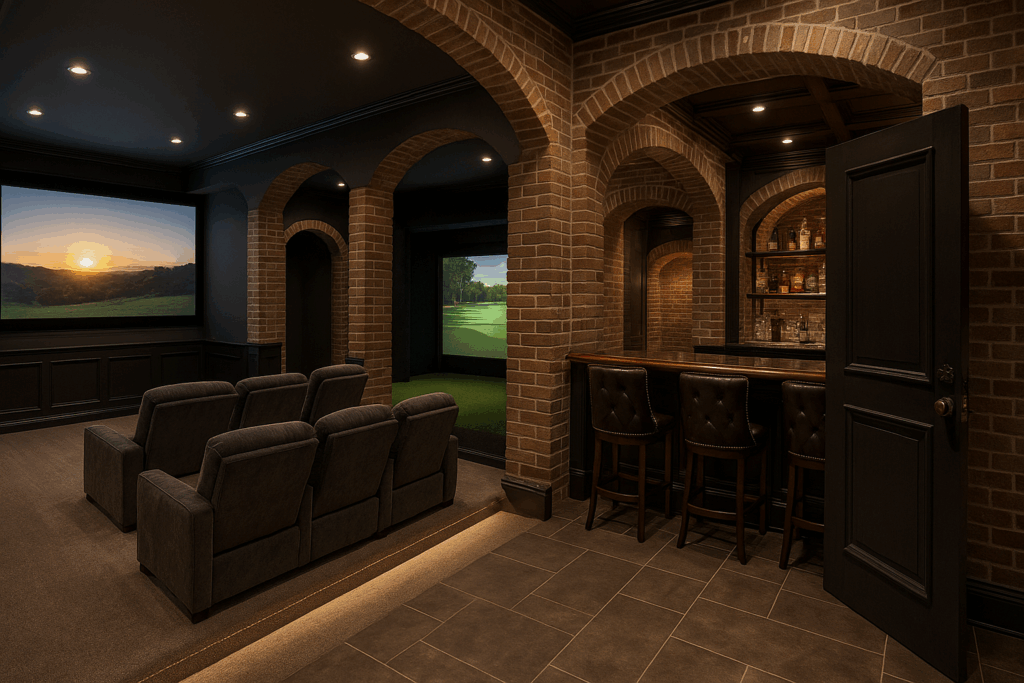
- In-law & Airbnb-ready suites: Complete with bathrooms, private entrances, and full kitchens, for family or extra income.
- Designer finishes: Quartz counters, custom built-ins, radiant-heated flooring, bold lighting features.
- Smart-home perks: Automated lighting, voice-controlled climate, and integrated security, all at your fingertips.
4. Design Styles & Layout Ideas for Every Basement
Now for the fun part, how do you want your basement to feel? Sleek and modern? Cozy and rustic? Or maybe something in-between that just works for your family? Whatever your style, your basement can become the most personalized space in your home.
Modern & Minimalist: Sleek, Bright, and Uncluttered
If you’re drawn to clean lines and calming spaces, this style hits the mark.
- Streamlined storage: Swap bulky cabinets for floating shelves and built-ins that keep things functional but airy.
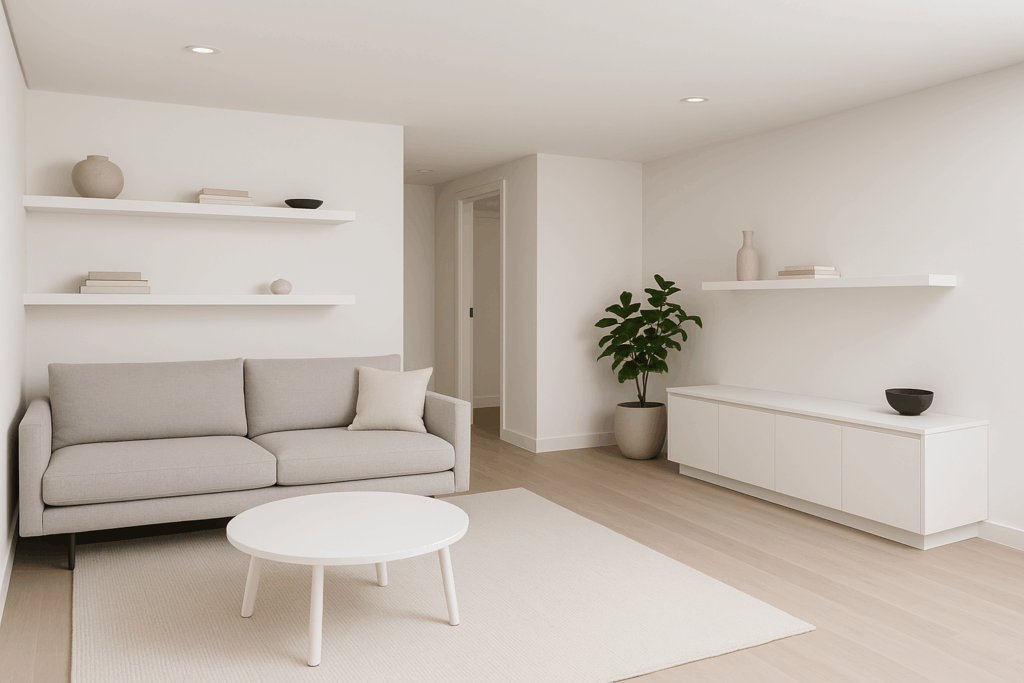
- Neutral but warm: A palette of whites, grays, and charcoals, softened with light woods, feels timeless instead of stark.
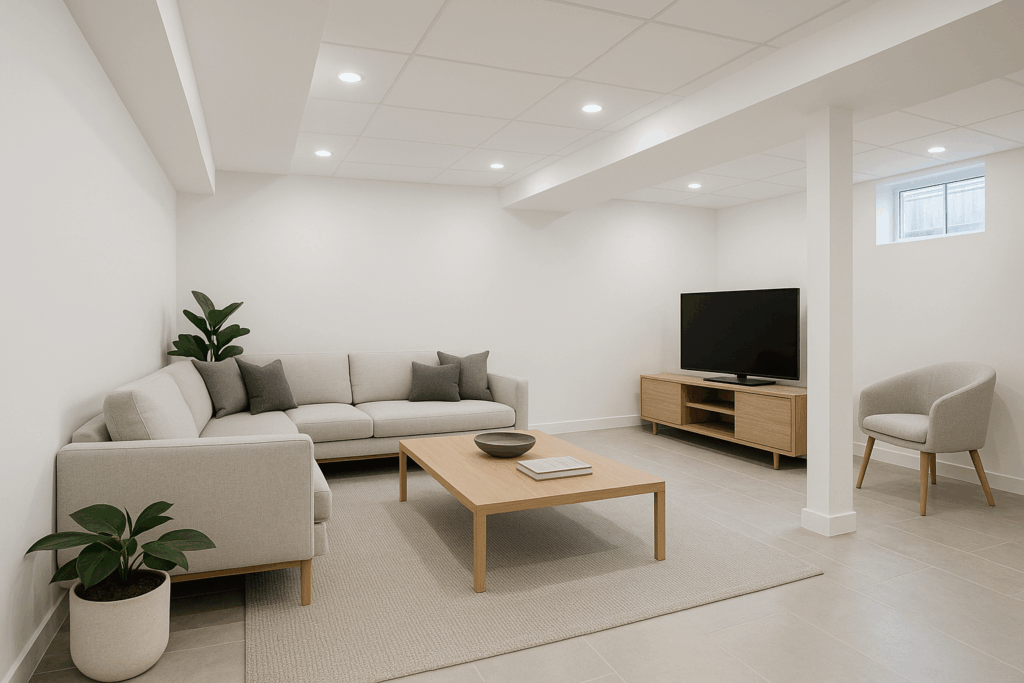
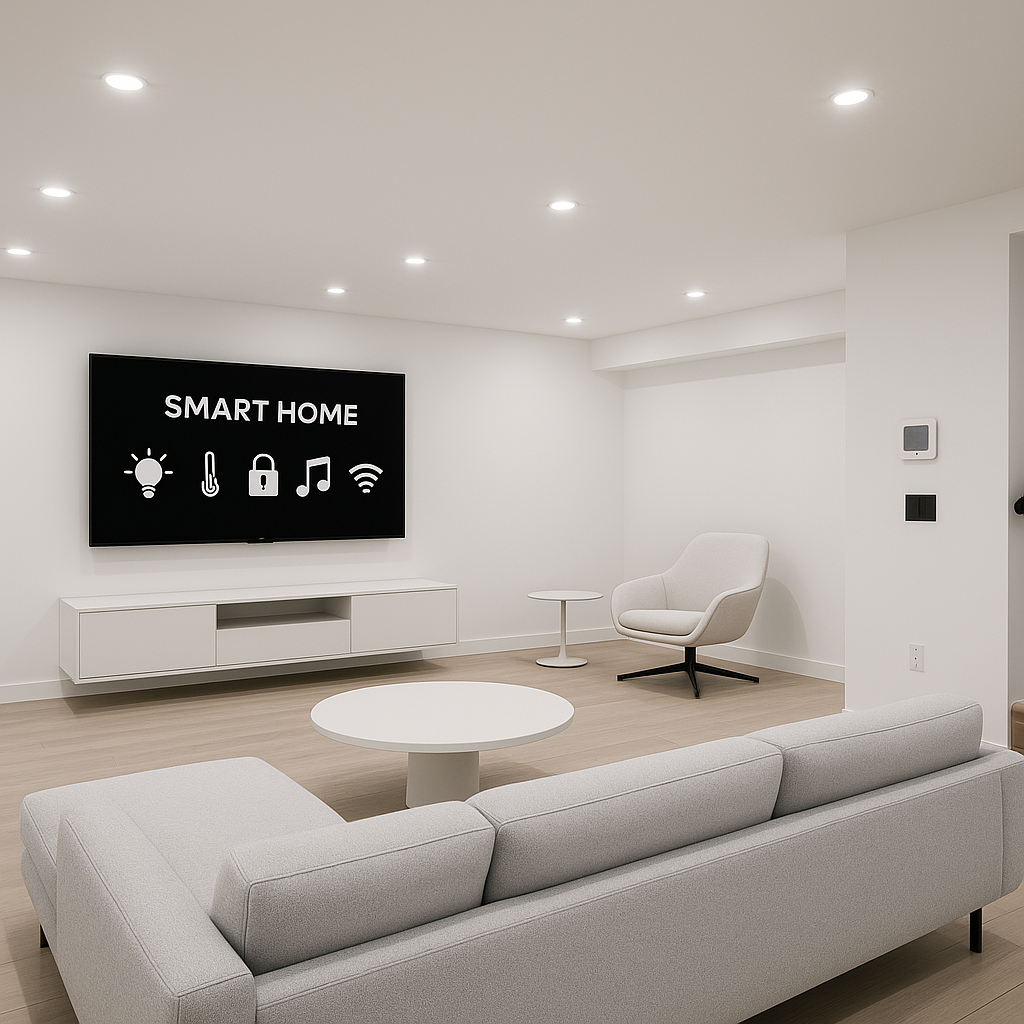
- Smart everything: Lighting, climate, even music, integrate smart tech so your basement responds to you, not the other way around.
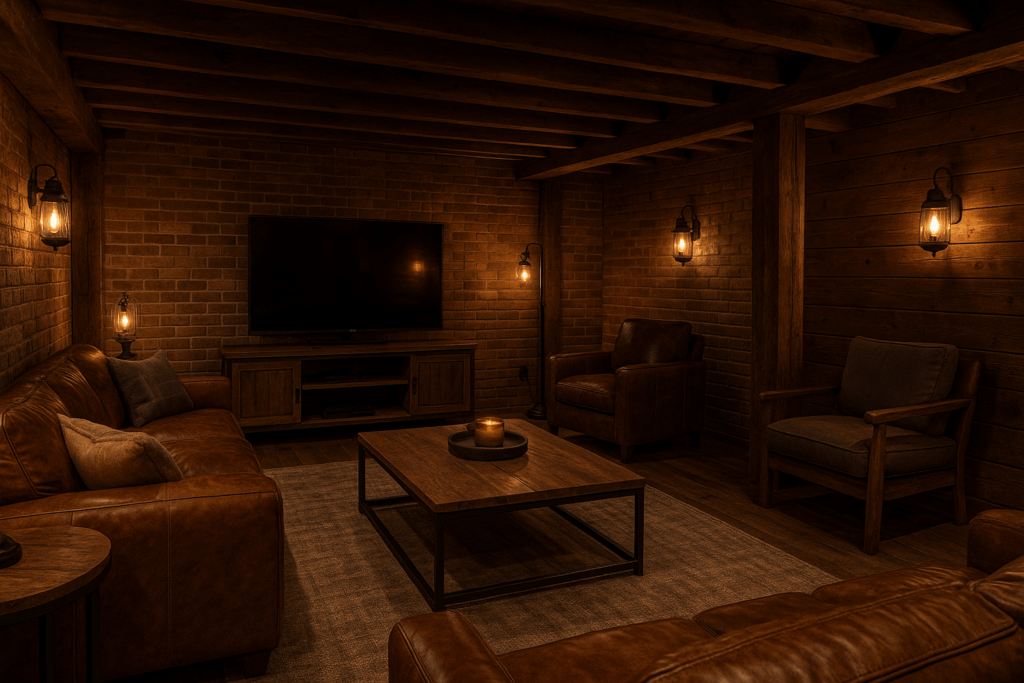
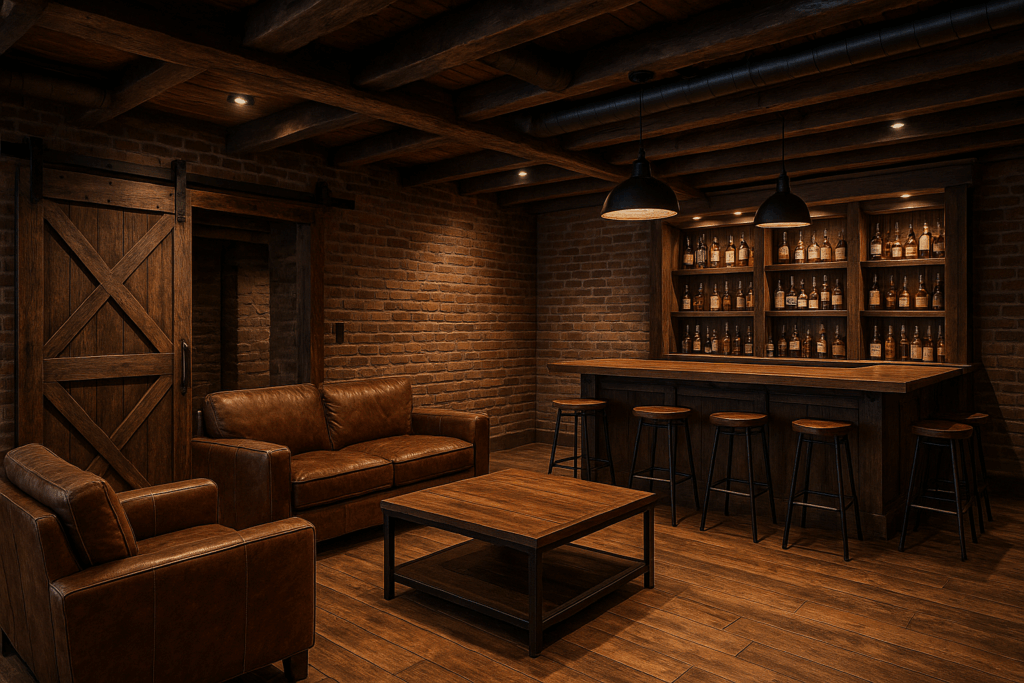
Rustic & Industrial: A Space with Soul
Love the character of old lofts or cabins? This style makes a basement feel alive.
- Exposed details: Brick accents, reclaimed wood beams, or black metal fixtures bring warmth and texture.
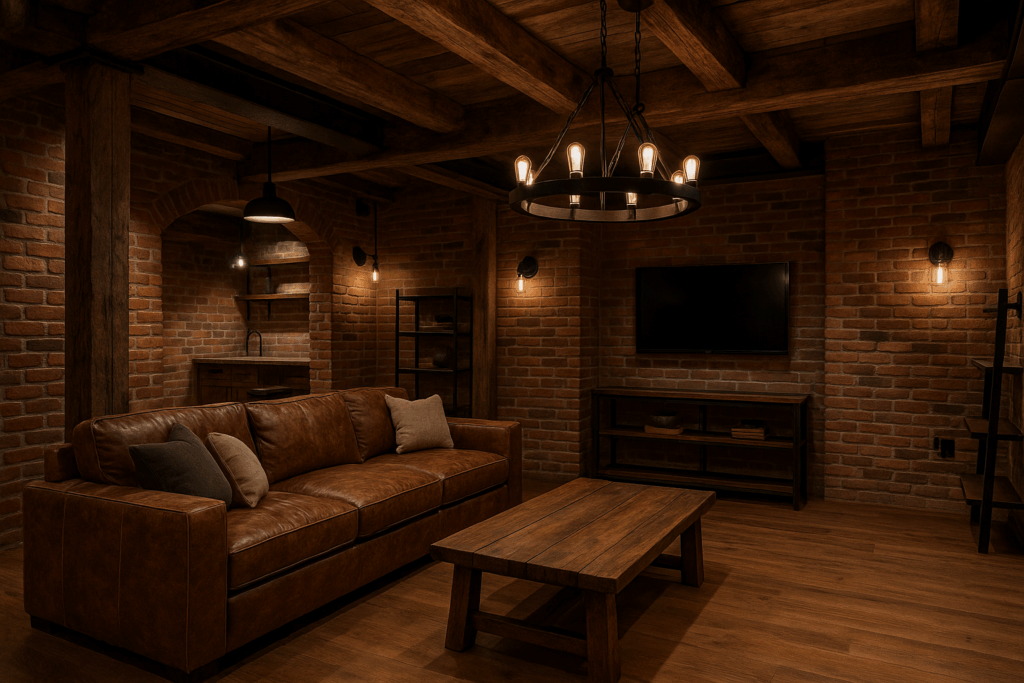
- Ambient lighting: Edison bulbs or lantern-style sconces give off a soft, welcoming glow.
- Signature features: Add a sliding barn door or a whiskey-tasting bar for a one-of-a-kind centerpiece.
6. Safety, Code & Structural Must-Knows
Before you start dreaming about bars and home theaters, let’s talk about the less glamorous stuff, the part that keeps your basement safe, legal, and problem-free for years to come.
Permits & Code: Don’t Cut Corners
Basement remodeling isn’t the place for “good enough.”
- Building permits: If you’re adding bedrooms, bathrooms, or making structural changes, you’ll need one. It’s not just paperwork, it protects your investment when you sell.
- Ceiling height: Most cities require at least 7 feet of clearance for living spaces. If yours falls short, you’ll need creative solutions (lowering the floor, rerouting ductwork).
- Egress windows: Planning a bedroom? It’s not optional, code requires an emergency exit window, and it makes the space brighter and safer.
Waterproofing Comes First
Basements and moisture don’t get along, and in Long Beach soil, the risk is even higher.
- Seal the foundation: Small cracks today can mean water damage tomorrow.
- Add vapor barriers & sump pumps: Protects against groundwater and humidity.
- Run a dehumidifier: Keeps air dry and prevents mold from sneaking in.
Waterproofing upfront costs far less than cleaning up a flooded basement later. Don’t skip this step.
Air Quality & Ventilation
Basements can trap air, and sometimes things you don’t want to breathe.
- Radon testing: It’s odorless and dangerous. Test it before you finish the space.
- Ventilation upgrades: Extend your HVAC or add standalone units to keep air fresh and healthy.
Want peace of mind before you remodel? Book a pre-project safety check — we’ll handle the code, testing, and waterproofing for you.
7. DIY vs. Hiring a Contractor: What’s Best for You?
Here’s the truth: you can DIY parts of a basement remodel, but some things? They absolutely require a pro. Knowing which is which can save you money, time, and a world of headaches.
When DIY Makes Sense
If you’re handy (and patient), these are safe wins:
- Painting: Fresh walls instantly transform a space. Easy, high impact.
- Simple flooring: Peel-and-stick vinyl planks or carpet tiles are weekend-friendly and affordable.
- Decor & storage: Floating shelves, modular furniture, or even a basic accent wall are totally doable.
When to Call the Pros
Some projects need licensed hands, no exceptions:
- Electrical: Rewiring, outlets, or recessed lighting require permits and professional installation.
- Plumbing: Bathrooms, wet bars, or moving drains? Hire a plumber.
- Structural changes: Removing walls or adjusting ceiling height? You need an expert who understands load-bearing walls and safety codes.
Choosing the Right Contractor
Not all pros are equal. Here’s how to avoid a nightmare:
- Check credentials: Make sure they’re licensed, insured, and experienced with basements.
- Read local reviews: Look for proven work in Long Beach, and surrounding areas.
- Get detailed estimates: A real contractor breaks down costs and timelines — not just a “ballpark” number scribbled on paper.
Not sure where to draw the line? Schedule a consult — we’ll tell you what you can do yourself and where a pro is worth every penny.
8. Basement Remodel Timeline: What to Expect
A basement remodel isn’t an overnight project, but knowing the timeline upfront makes it way less stressful.
How Long Does It Take?
On average, expect 2–6 months, depending on complexity:
- Weekend refreshes: 2–4 weeks. A little paint, lighting, and DIY flooring.
- Mid-range remodels: 2–3 months. Reconfiguring walls, adding egress windows, or installing wet bars.
- Full-scale conversions: 4–6 months. In-law suites, theaters, luxury finishes, and smart tech.
Step-by-Step Flow
- Planning & Design (2–4 weeks): Work with a designer to lock in layouts, finishes, and budgets.
- Permits & Prep (1–3 weeks): Pull permits, order materials, and prep the space.
- Demo & Framing (1–3 weeks): Tear out old walls, frame new layouts.
- Electrical & Plumbing (2–4 weeks): Add wiring, outlets, lighting, or plumbing for bathrooms/bars.
- Finishing (3–6 weeks): Drywall, paint, flooring, cabinetry, and fixtures.
- Final Touches (1–2 weeks): Trim, decor, and inspections — the details that make it livable.
Pro Tip: Get a written timeline from your contractor. If they can’t give one, that’s a red flag.
9. Frequently Asked Questions
1. How much does it cost to remodel a basement in 2025?
Anywhere from $5,000 for a basic refresh to $75,000+ for full-scale transformations. Most mid-range projects in Fort Worth and surrounding areas land between $20,000–$45,000.
2. What upgrades give the highest resale value?
Bedrooms with egress windows, bathrooms, and entertainment spaces (like theaters or bars) top the list for ROI.
3. Can I remodel my basement on a tight budget?
Absolutely. Fresh paint, improved lighting, peel-and-stick flooring, and modular furniture can transform a space for under $15K.
4. Do I need a permit to finish my basement?
In most cases, yes, especially for bedrooms, bathrooms, or structural changes. It protects you legally, and when selling.
5. How do I keep my basement from getting damp?
Start with waterproofing, sealing cracks, and adding a vapor barrier. A dehumidifier helps keep humidity in check.
6. Can I rent out my finished basement?
Often yes, but check local zoning laws. Adding a bathroom, egress window, and separate entrance makes it rental-ready.
7. How long does a basement remodel take?
- Basic updates: 2–4 weeks.
- Mid-range remodels: 2–3 months.
- Luxury builds: 4–6 months.
8. Should I DIY or hire a contractor?
DIY works for paint, decor, and simple flooring. But plumbing, electrical, and structural changes need licensed pros.
9. What are the top basement design trends for 2025?
Speakeasy bars, in-law suites, multi-use family rooms, and smart-home entertainment setups are big this year.
10. Does finishing a basement really increase home value?
Yes, basement remodels can recoup up to 70% of their cost at resale, according to national reports.
Still have questions? Book a free consult — we’ll walk you through your options in plain English.
10. Final Thoughts: Your Basement, Your Way
Right now, your basement might be a catch-all for boxes, holiday decor, and that treadmill you never use, but it doesn’t have to stay that way. With the right plan, it can become the most loved room in your home.
Whether you’re dreaming of a cozy movie lounge, a guest-ready in-law suite, or even an income-generating rental, the options are limitless. And here’s the kicker, basements remodeled with purpose can return up to 70% of their cost at resale.
We’ve helped homeowners across Long Beach, and beyond take forgotten spaces and turn them into bright, functional extensions of their homes. Now it’s your turn.
