
High energy bills, drafty rooms, and coastal weather – if you’re a Nassau County homeowner, you’ve probably wondered if your old windows are partly to blame. Is paying extra for energy-efficient windows really worth it? Will those fancy features actually lower your heating and AC costs, or is it just hype?
In this guide, we’ll break it down. We’ll explain what makes a window energy-efficient in plain English, why energy costs can be so high here in Nassau, how much you might save by upgrading, and the less obvious benefits (like a more comfortable, quieter home). By the end, you’ll have a clear picture of whether energy-efficient windows are a smart investment for your Long Island home.
What Exactly Is an Energy-Efficient Window?
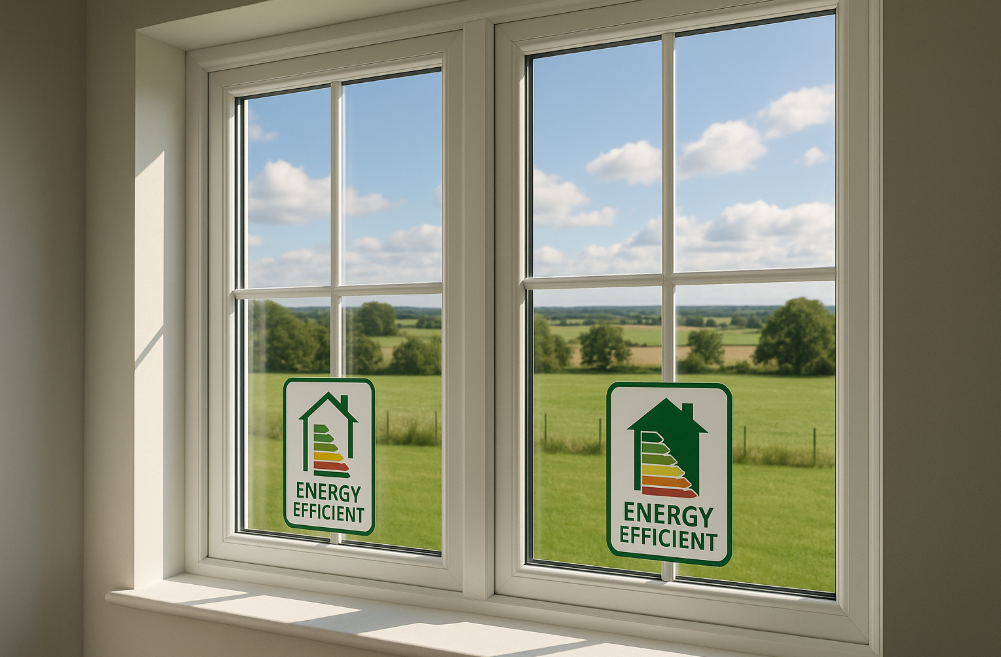
In simple terms, an energy-efficient window is built to keep heat where you want it. In winter, it keeps your indoor heat from leaking out; in summer, it keeps outdoor heat from sneaking in. It does this with a few special features:
- Multiple Panes of Glass: Instead of a single pane, efficient windows have two (double-pane) or even three (triple-pane) layers of glass. The space between is often filled with an insulating gas like argon. This setup slows down heat transfer – kind of like how a thermos bottle works.
- Low-E Coatings: This is a nearly invisible metallic layer on the glass that reflects heat. In winter, Low-E glass bounces your home’s heat back inside. In summer, it reflects the sun’s heat away so less of it enters your house. You won’t really notice it’s there, except maybe a slight tint or increased reflection if you look at the glass just right.
- Insulated Frames & Good Seals: The frame material can make a difference. Vinyl, fiberglass, or composite frames insulate better than aluminum (which can act like a heat highway). Energy-efficient windows also have better weatherstripping and sometimes foam inside the frames to plug air leaks. All that helps stop drafts.
- Warm Edge Spacers: This is a small detail, but the spacer that separates the glass panes can be made of insulating material too, reducing heat loss at the glass edge (and helping prevent that condensation line you sometimes see on winter mornings).
Think of an energy-efficient window as a shield between you and the outdoor extremes. It lets in light and views, but it tries its best to keep the indoor climate in and the outdoor climate out.
Why Energy Costs Are So High in Nassau County
Quick reality check: Long Island isn’t the cheapest place for utilities. Here’s why our environment and situation make window efficiency a big deal:
- Chilly Winters: Nassau County winters may not be Siberia, but we get freezing temps and plenty of windy days. You pay a lot to heat your home (oil, gas, electric – none are cheap here). Drafty windows or single-pane glass let that expensive warm air seep out and allow cold air to infiltrate, so your furnace has to work overtime.
- Hot, Humid Summers: Then comes July and August – high 80s, 90s, plus humidity you can wear. Air conditioning becomes a necessity, not a luxury. But if your windows aren’t well insulated, that cool air slips outside while the heat creeps in. It’s a constant battle and your electric bill shows it.
- Coastal Winds: Being near the ocean means we get breezes. Nice when you’re on the beach, not so nice when those gusts find the gaps in your old windows. A strong wind can literally pull warm air out of your house (negative pressure and all that science). Homes by the shore or even a few miles in feel those winter and storm winds – if your windows aren’t snug, you’ll know it.
- Older Homes & Windows: Nassau has lots of older housing stock. There are charming 50+ year-old homes in the Five Towns, Oceanside, Massapequa, you name it. Many still have their original windows (or decades-old replacements). Those might be single-pane or early double-panes that don’t have modern tech. In short, not great on efficiency.
- High Utility Rates: We pay more per kilowatt-hour of electricity or per therm of gas here than many parts of the country. So every bit of energy you lose to inefficiency costs you extra in dollars. Inefficient windows = more heating and cooling use = bigger bills, especially when the rates are high.
Combine all that, and it’s clear why some folks feel like they’re heating the whole neighborhood in winter or struggling to keep cool in summer. Windows are often the weakest link in the house’s insulation, so upgrading them can directly tackle a big chunk of these issues.
How Much Can You Actually Save with Energy-Efficient Windows?
Let’s talk potential savings – the part everyone wants to know. The exact numbers will vary, but here are some reasonable expectations:
- Percentage Savings: Switching from old single-pane windows to modern energy-efficient windows can trim roughly 10% to 30% off the window-related portion of your energy bills. Since windows account for a fair chunk of heat loss/gain in a home, overall heating/cooling bills might drop by, say, 10-20%. (If your windows were truly terrible, the improvement could be on the higher end!)
- In Dollars: Suppose you pay $200 a month in winter for heating and $150 in summer for electricity. A 15% reduction would save you about $30 on that winter bill and $22 on that summer bill. Over a year, that might be a few hundred dollars saved. Over 10-20 years… we’re talking many thousands.
- Real World Example: We had a homeowner in Plainview report that after a full window upgrade, their January gas bill went from ~$300 down to about $240 (they also added some insulation, to be fair). Another in Baldwin noticed their summer electric bills dropped by about $50 a month because the AC ran less. Individual results vary, but the common theme is a noticeable reduction.
- Comfort “Savings”: This isn’t dollars, but it’s worth noting. You might find you can set your thermostat a degree or two lower in winter and still feel comfortable, because the drafts are gone. Or you might use the ceiling fan more and the AC less in summer because the house isn’t heating up as much from sun beating through old glass. Those behavior changes further increase savings.
Important: energy-efficient windows won’t typically slash your bills in half or anything dramatic (despite what some sales pamphlets claim). Think of it more like taking the foot off the accelerator – your furnace/AC doesn’t have to race to catch up all the time. The savings are real but gradual, accruing over time. And as energy prices rise (fingers crossed they don’t, but history says otherwise), your savings in the future could be even greater.
Do Energy-Efficient Windows Cost More Upfront?
In a word, yes. The more efficient a window is, the more engineering and materials have gone into it, which usually means a higher price tag. Here’s what to expect:
- Base vs. Upgraded Models: Almost every window line has a “good, better, best.” The good (base) model meets minimum requirements (double-pane, basic Low-E). The “best” model might have triple-pane, multiple Low-E layers, foam filled frames, etc. The best can cost 15-30% more than the base in that same line.
- Example: If a standard double-pane vinyl window is $500 installed, the super-duper triple-pane version might be $600-$650 installed. Multiply that by the number of windows and it’s a bigger investment, no doubt.
- Is It Worth It? Over time, usually yes, but it takes years to recoup that difference in price through energy savings. Many homeowners make the choice not just on pure ROI, but on comfort and “future-proofing” – if you’re gonna be in the house 20 years, you might as well get the best you can afford so you’re extra comfy and saving maximally the whole time.
- Most Bang for Buck: Often, the middle option (the “better,” not the “best”) is a sweet spot. You pay a bit more than base, get most of the efficiency benefits, but avoid the steep price jump of the absolute top tier. For instance, maybe you skip triple-pane but get double-pane with an upgraded Low-E and argon gas fill. That captures, say, 80-90% of the savings of triple-pane at a fraction of the upgrade cost.
- Payback Period: Many efficient window upgrades pay for themselves in savings over, say, 5-10 years. Windows themselves (even inefficient ones) would save money eventually just because new windows stop some drafts your old ones had. When you tack on extra efficiency features, you extend the payback timeline a bit. But remember, you start enjoying the comfort and noise reduction and easier operation immediately – the payback on comfort is Day 1.
So yes, you shell out a bit more upfront for energy-efficient windows, but it’s not an outright cost – it’s more like transferring some money into the “home investment” column that slowly drips back into your “savings” column through lower bills. And as we’ll touch on, there are rebates/credits that can ease that upfront cost too.
Everyday Comfort You’ll Notice Right Away
Saving money is great, but an often immediate benefit of energy-efficient windows is how much more comfortable they make your home:
- No More Drafts (and Steadier Temps): Rooms stay comfortable without chilly spots in winter or hot spots in summer. You won’t feel that cold air sneaking in, or that blast of heat on a summer afternoon. Many homeowners are shocked at how stable the indoor temperature becomes once leaky windows are addressed.
- Quieter Indoors: Those extra panes and insulating features do wonders for soundproofing. You’ll notice less traffic noise, fewer lawnmowers and leaf blowers intruding on your peace. The house just feels calmer.
- Less Condensation & Fading: Efficient windows get less frost/condensation in winter (so less chance of mold) and block more UV rays in summer (so your furniture and floors fade slower).
- Easier to Use: This is more of a new window perk in general, but worth noting. New windows (especially quality ones) open and close smoothly, lock easily, and often tilt in or have easy-clean features. No more wrestling with a swollen wood sash or propping a window with a stick. That’s a comfort to your sanity, if not your body.
In short, “worth it” isn’t just about the dollars. It’s coming home to a house that isn’t an icebox in one corner and a sauna in another. It’s being able to enjoy a stormy night without feeling the windows rattle and hearing the wind whistle through. It’s hosting Thanksgiving without Grandma needing a sweater at the dinner table because she’s sitting near the window. These everyday quality-of-life improvements are hard to quantify, but when you experience them, you get it.
Rebates and Tax Credits That Make Them Cheaper
Before you fret too much about the upfront cost of efficient windows, let’s talk about free money (or at least, money you can get back):
- NYSERDA & State Programs: New York State often has incentives for energy efficiency upgrades. Through programs like EmPower or Assisted Home Performance, qualifying homeowners can get rebates or subsidies for things like window upgrades (especially if done as part of a larger energy improvement project). These can be significant – sometimes covering a chunk of the cost if you meet certain income or location criteria.
- PSEG Long Island: Our utility occasionally offers rebates for specific upgrades, like if you participate in a whole-home energy audit and retrofit program. For example, while they may not cut a check specifically labeled “window rebate” for everyone, they might have a program where if you reduce your home’s modeled energy usage by X%, they provide Y dollars in rebate. New windows can be a big part of reaching that goal. PSEG LI also has on-bill financing for improvements, making it easier to pay over time.
- Federal Tax Credit: The federal government (as of now) offers a tax credit for installing energy-efficient windows. This credit is 30% of the cost of the windows, up to $600 per year. So if you spend $2000 on qualifying windows, you could get $600 back as a credit when you do your taxes. It’s not a deduction, it’s a credit – which means dollar-for-dollar reduction of your tax bill. (Consult your tax advisor for specifics, of course, but it’s a nice perk Uncle Sam is giving to encourage people to save energy.)
- Manufacturer/Installer Promotions: Keep an eye out – sometimes window manufacturers run seasonal promotions (like a certain percent off for Energy Star windows during “Energy Awareness Month” or whatnot). Local installers might also throw in a free upgrade (e.g., free Low-E triple-pane glass upgrade in February to keep crews busy). These deals can shave off some cost.
- Combining Incentives: Often, you can layer these. For instance, you could get a NYSERDA rebate and claim the federal tax credit. That’s like double dipping in a totally legal, encouraged way.
All this means the effective cost of those fancy windows might be less than the sticker price. We’ve seen homeowners pleasantly surprised that after incentives, the net cost difference between standard and high-efficiency windows wasn’t big at all.
Which Style Works Best in Nassau’s Climate?
Energy-efficient windows come in all shapes and styles – you don’t have to get a specific type to get efficiency. But there are some style choices that can maximize performance here:
- Double-Pane vs. Triple-Pane: Triple-pane gives you an extra thermal barrier. It’s great for top efficiency and noise reduction. In Nassau’s climate (cold winters, hot summers), triple-pane will save a bit more energy, but double-pane windows that are well-made and have Low-E coatings are already very effective. For many, the jump to triple-pane is only worth it if you really want the highest efficiency or have a noisy environment. It’s a bit of an overkill for some homes, but for others (say, you hate any street noise or you plan to be in your home forever and want every BTU saved), it’s a nice luxury.
- Casement/Awning vs. Double-Hung/Slider: The mechanism can affect air tightness. Casements (or awnings) that crank and seal against the frame tend to have slightly less air leakage than double-hung or sliding windows, which have weatherstripping that can wear and more seams. In a windy locale (hi, south shore breezes), a casement might block drafts more effectively when closed. That said, a quality double-hung with good weatherstripping still can perform excellently – we’re talking small differences. But if you’re all about squeezing out efficiency, you might lean toward cranking windows in key draft-prone spots.
- Window Coatings for Our Climate: We have heating and cooling seasons, so we benefit from a balanced Low-E coating (often called “Low-E 366” or similar by manufacturers). This kind of glass reflects heat both ways. If you have a big picture window facing south/west, consider a Low-E that’s slightly stronger on blocking solar heat (to help with summer). If you have lots of north-facing windows (no direct sun), you might prioritize higher insulation value. Most window companies configure this for you automatically if you say “I’m in New York,” but it’s something to be aware of.
- Frames for Humidity: From an efficiency and durability standpoint, vinyl and fiberglass are winners in our humid, coastal climate. Wood can insulate well but as mentioned needs maintenance to keep it efficient (rotted wood isn’t efficient!). Fiberglass also handles temperature changes well (less expansion/contraction) which means seals stay tighter over the years.
- Near the Water: If you’re right by the ocean or bay, consider impact-resistant windows. They aren’t just for hurricanes – they also have a benefit of an extra layer (laminated glass) that adds insulation and nearly eliminates UV fading. They cost more, yes, but some Long Beach area homeowners opt for them for peace of mind. It’s a style choice in a way – standard vs. impact glass.
In summary, there’s no one style you must choose for efficiency. It’s more about the window’s build quality and features. So you can have your preferred style (double-hung, casement, etc.) and still get high efficiency – just order the efficient version of it. We often mix and match in a home: maybe casements on the windy front side, double-hungs elsewhere for ease – all ordered with the same efficient glass package so everything performs well.
Common Questions from Nassau Homeowners
Are efficient windows worth it if I’m selling my house in a few years?
If you’re selling soon, you won’t personally reap the long-term energy savings. However, new windows do make your house more attractive to buyers. It can potentially increase your resale value and definitely increase interest. Buyers around here appreciate the upgrade (one less thing for them to do, and lower bills for them). So you might not get every dollar back in sale price, but you could see a higher offer or quicker sale. Plus, you’ll enjoy the comfort in the years you’re still there. If your windows are in bad shape, replacing them can actually help your home sell in the first place. If they’re okay and you’re really selling super soon, you could possibly hold off – but weigh the pros and cons.
Do energy-efficient windows look different than regular windows?
From the street, no difference. Modern efficient windows are designed to look just like normal ones. The Low-E coating is basically invisible (at most, you might notice a slight reflective quality if the light hits just right, but no one’s going to say “oh look, Low-E glass!”). The frames might be a tad thicker on very high-performance windows or triple-pane models, but most people can’t tell. In fact, most new windows will probably look better simply because they’re new and often have slimmer profiles than clunky old ones. So, style-wise, don’t worry – you won’t be sacrificing appearance for efficiency.
How long do energy-efficient windows last in our coastal weather?
High-quality windows, efficient or not, should last 20-30 years easily with proper care. Coastal weather is tough on everything, so choose windows with good warranties and materials (vinyl, fiberglass, or well-protected wood). The efficiency features (like Low-E coating or argon gas) don’t “wear out” quickly – argon can slowly dissipate over decades, and coatings last the life of the glass unless physically damaged. So your windows will remain efficient for a long time. The main things that could shorten window life here are hardware corrosion or frame deterioration, which is why material choice is key. Many efficient windows come with lifetime warranties on frames and 20-year on glass seals, even here. So, pick good ones and they’ll stick around performing well.
Do they need more maintenance?
Not really. Energy-efficient windows don’t demand anything special from you. You’ll maintain them like any other window – keep the glass clean (so the Low-E can do its job unhindered by dirt), maybe vacuum the tracks occasionally, and check the caulking every so often to ensure no gaps. The efficient features are all sealed inside (the Low-E layer is between glass layers, etc.), so you can’t harm them with normal cleaning. If anything, you might end up doing less maintenance than before – e.g., you won’t be seasonally swapping out storm windows (if you had those) because efficient windows negate the need for storms.
So, Are They Worth It? (Our Honest Answer)
In most cases, yes – energy-efficient windows are worth it in Nassau County. They tackle some of the biggest sources of energy waste in your home, meaning you use less heating fuel and less electricity for cooling. That translates to savings on your bills year after year. Beyond that, your home becomes more comfortable (which, once you experience, you won’t want to give up), and new windows give your house a face-lift and added value.
Now, are there scenarios where they’re less worth it? If your windows are already relatively new double-panes in good shape, jumping to brand-new windows might not be priority #1 in terms of energy ROI – you might insulate your attic or get a new HVAC first, for example. But for anyone sitting on old, drafty, single-panes or early-generation double-panes, the case for new efficient windows is strong. It’s one of those upgrades that improves your day-to-day life immediately and pays you back over time.
We’ve rarely heard someone say, “I wish I’d kept my old, inefficient windows.” On the flip side, most Nassau homeowners who upgrade to energy-efficient windows say their only regret is not doing it sooner. Take that for what it’s worth!
Cut Your Nassau Energy Bills Before Next Winter
Tired of feeling cold drafts in the winter or watching your AC struggle in the summer? Upgrading to energy-efficient windows could be the best quality-of-life improvement you make to your home – and it will show up in your utility bills too.
As a veteran-owned, licensed, and 5-star rated local company, Recast NY has helped countless Nassau County homeowners swap out their old windows for modern, efficient ones. We treat our neighbors like family, meaning we give honest advice (if your windows are fine, we’ll tell you; if they’re costing you, we’ll show you how new ones can help).
Ready to see if new windows are worth it for you? We offer free consultations with zero pressure. We’ll evaluate your current windows, explain your options and potential savings, and even point out any rebates or credits you could snag.
Don’t sweat through another summer or shiver through another winter wondering “what if.” Take the first step toward a more comfortable home and lower bills. Contact Recast NY today to get your free window quote – and let’s make those energy bills a whole lot easier to handle!
