
If you’re like most Long Beach homeowners, you’ve wondered what new windows really cost – and if they’re worth it. Maybe you’ve got a couple of windows that don’t open well or have that perpetual fog between the panes, and you’re dreading the price tag of fixing it all. Let’s break it down in plain English. We’ll talk about average costs around here, why one person’s window job might cost more or less than another’s, how different materials and styles affect the price, and even some tips to save money. By the end, you won’t need a crystal ball – you’ll have a clear idea of what to expect to pay for window replacement in Long Beach, and how to make the most of your budget.
So, What’s the Average Price for New Windows Around Here?
Let’s get the big question out of the way first. In Long Beach (and generally the Nassau County area), most homeowners spend somewhere between $7,000 and $12,000 for a whole-house window replacement. That might translate to roughly $600 to $1,000 per window installed for a mid-range product.
Now, that’s a broad range – let’s unpack it:
- If you have a smaller home or just a few windows to replace, you might spend less. For example, 5 basic vinyl windows might end up around $3,000 – $4,000 total.
- A larger home with premium wood or fiberglass windows could run $15,000 – $20,000.
- Most of your neighbors in Long Beach who have a moderate-sized house with decent (but not ultra-fancy) windows will land in that $7K-$12K window (pun intended). That might be, say, 10 to 15 windows at a mix of sizes.
These numbers include installation, old window removal, and typically a standard finish-out (like exterior capping and interior trim reattachment). Keep in mind, every house is different. But hearing what “most people” pay gives you a starting point so you’re not flying blind.
Why the Price Isn’t the Same for Everyone
Home renovation pricing isn’t one-size-fits-all – and windows are a perfect example. Think of it like buying a car: a base model sedan starts at one price, but by the time you choose leather seats, the sport package, and the turbo engine, the price looks very different. For windows, here are the big factors:
- How Many Windows: Obvious, but crucial. Replacing 20 windows costs about double replacing 10 (though sometimes volume can get you a slight per-window discount from contractors).
- Window Size: A living room picture window that’s 8 feet wide will cost way more than a 2-foot bathroom window. More glass, more materials, more labor.
- Material & Brand: Vinyl is generally the most affordable. Wood and fiberglass tend to cost more. Andersen, Pella, Marvin (brand names) might cost more than less-known brands or stock windows, often because of quality and warranty (and some brand premium).
- Window Type: A fixed picture window or a simple slider often costs less than a double-hung that opens, which in turn costs less than an elaborate bay window or garden window. The more complex or fancy the design (think grids, tilt-in features, multiple panes), the higher the price.
- Glass & Options: Standard double-pane vs. triple-pane with argon? Regular Low-E coating vs. “solar tint” or laminated glass? These efficiency or feature upgrades add cost. Decorative grids, between-the-glass blinds, special glass like frosted or art glass also add to the price.
- Installation Challenges: Not all installs are equal. If your window frames are rotted, they might need extra work to fix. High-up windows or difficult access (like over a staircase) might require more labor or equipment. If you’re changing the shape/size of the opening (called reframing), that’s more carpentry and more cost.
- Finishing Touches: Basic white windows with white trim = straightforward. But if you want custom exterior colors, or interior woodgrain finishes, or new interior trim/moldings, those can change the cost.
- Who You Hire: A licensed, insured contractor with a great reputation might charge a bit more (for good reason – quality and service). A friend’s cousin offering a low cash price might be cheaper but comes with risks (please don’t ask me about the time someone’s “handyman” left a window opening covered only with a trash bag for a week…).
So if you hear your friend down the block paid X and you get a quote for 1.3X, don’t panic. Go through these factors – chances are there’s a reason (different material, more windows, larger sizes, etc.). And always compare apples to apples: one quote might include painting and permits and another might not, for instance.
Window Materials: Which Fits Your Budget (and Home) Best?
The material of your window frames can have a big impact on cost (and other things like look and longevity). Here’s a friendly rundown:
- Vinyl Windows: These are the budget-friendly champs. Vinyl is a durable, plastic-like material that doesn’t rot or need painting. You’ll see vinyl windows in a huge number of homes because they’re cost-effective and perform well. For a Long Beach homeowner who wants low maintenance and good efficiency on a moderate budget, vinyl is often the go-to. They typically come in limited colors (white, beige, maybe brown) – so design-wise, they’re simple. Think of vinyl windows as the reliable Toyota Camry of windows: not the fanciest, but trustworthy and affordable.
- Wood Windows: Ah, the classic. Wood windows are beautiful – you can paint or stain them, and they have a natural warmth that some people love. But they’re pricier. And in our humid, salty air, they need upkeep (regular painting, etc. to keep them from warping or rotting). Some premium wood windows have aluminum or vinyl cladding on the exterior to help protect them – those are the best of both worlds but come at a premium cost. Wood is great for historic homes or high-end renovations where authenticity or a specific look is key. Budget-wise, expect to pay significantly more – maybe 2x what a vinyl window might cost, depending on brand and style.
- Fiberglass Windows: Fiberglass is a strong, stable material that can be painted and often mimics the look of wood (some even have wood veneer interiors). They don’t expand/contract as much as vinyl with temperature, and they’re very durable (great for coastal climates). Cost-wise, fiberglass tends to run more than vinyl, closer to wood or sometimes in between wood and vinyl. It’s like the premium synthetic option. If vinyl is a Camry, fiberglass might be a Lexus – related, but more upscale.
- Aluminum Windows: These are less common in residential these days around here, but some older modern homes or condos might have them. Aluminum is strong and allows for thin frames (good for views), but it conducts heat (not great for efficiency) and can corrode near salt. They’re relatively inexpensive per unit and very durable structurally, but in a home, the poor efficiency makes them less popular now. Often, aluminum windows show up in commercial or apartment buildings. If someone quotes you aluminum windows for your house, be sure you understand the trade-offs.
- Composite Windows: This is a newer category – materials like Fibrex (a wood-vinyl composite Andersen makes) or other blends. These aim to give a mix of strength, insulation, and low maintenance. Their cost tends to be in the upper-mid range (comparable to wood/fiberglass depending on the brand). They can be a good option if you want something a bit sturdier than vinyl but not as pricey as pure wood.
In terms of budget fitting: vinyl is usually the most gentle on the wallet, wood and high-end fiberglass/composites are the most demanding on the wallet, and the others fall somewhere in between. The right choice also depends on how long you plan to stay (wood’s upkeep is worth it if you love the look and will maintain it, otherwise you might lean vinyl/fiberglass). Also consider your neighborhood – in an area with multi-million dollar historic homes, vinyl might be out of place; in most neighborhoods, though, today’s vinyl windows look perfectly good and few people can tell the difference once installed.
Styles That Change the Price Tag
Not all windows cost the same to replace – style plays a big role:
- Double-Hung & Single-Hung: These are the most common (double-hung means both top and bottom sash move; single-hung means only bottom moves). They are typically the baseline for pricing. Because they’re common and straightforward, you get a lot of options and competitive pricing. In Long Beach’s older homes, you likely have double-hungs, so replacing like-for-like is usually cost-efficient.
- Casement & Awning Windows: Casements crank out vertically (side-hinged) and awnings crank out horizontally (hinged at top). These often cost a bit more than a double-hung of similar size. Why? Hardware and the fact that the entire unit is one sash that needs to be strong enough to hold the glass when extended. Figure maybe 10-20% more in some cases. But you get that nice full-opening ventilation, which many find worth it.
- Sliding Windows: These slide side-to-side. Price-wise, they’re usually comparable to double-hungs. Less hardware (just rollers), more glass. They’re a good value for wide horizontal spaces.
- Bay & Bow Windows: These bad boys are awesome and gorgeous – and definitely more expensive. A bay window (typically one large fixed center with two sides that angle back to the wall) or a bow (a gentle curved array of several windows) is like getting 3+ windows in one structure, plus the roofing/structure for the projection. They can easily cost as much as 3-5 standard windows, sometimes more. Installation is more involved too (they stick out of the house). But they can transform a room and add a cozy window seat area, so many homeowners splurge on one in a front room.
- Picture Windows: A picture window is a fixed (non-opening) window, often large, meant for views. Surprisingly, on a per-size basis, picture windows often cost less than windows that open, because they have no moving parts. If you have a big opening and you fill it with a picture window instead of, say, a pair of casements, you might save some money (assuming you’re okay with it not opening). They’re great for living rooms with a view of the beach or backyard.
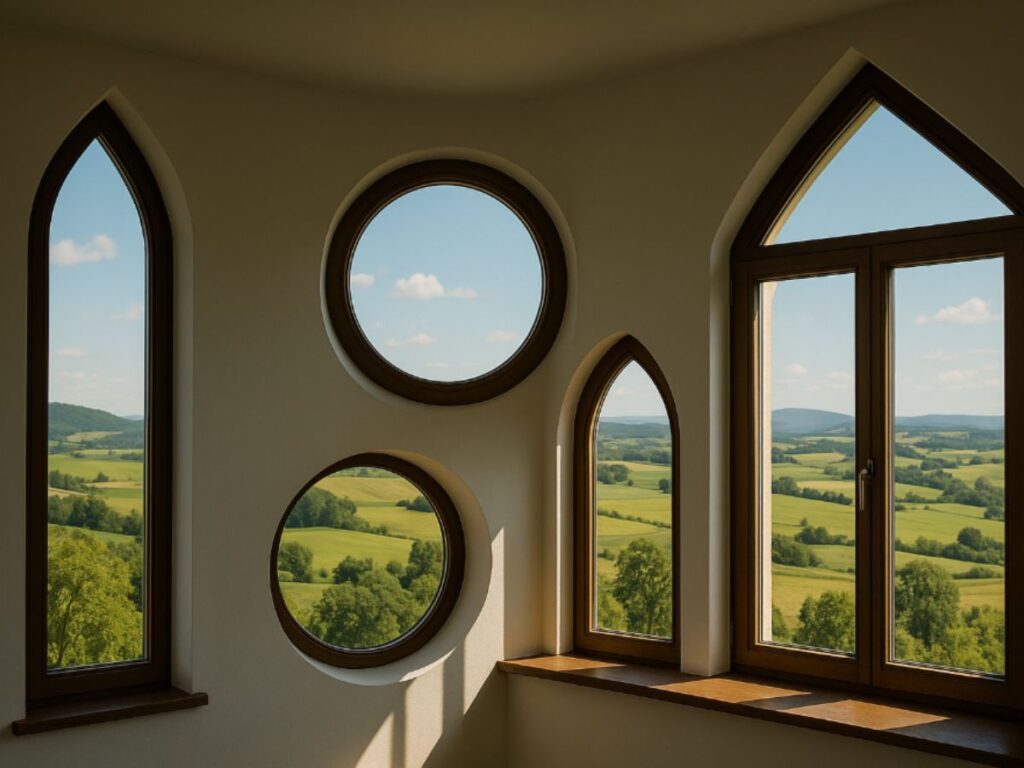
- Custom Shapes: Got an arch? A circle? Triangle? Anything not standard is going to cost more. They may need special manufacturing, templates, or extra thick frames. Typically, a specialty shape could be 50-100% more than a rectangular window of similar width. Often you do these as accents (like a half-circle above a door), so it’s not too bad in the grand scheme, but be prepared for a higher unit cost.
- Garden Windows & Others: A garden window (like a mini greenhouse that sticks out from the kitchen wall) or other niche designs also carry a premium. They’re kind of like mini bay windows with glass on top. Cute for plants, a bit pricier than flat windows.
Think about which windows in your home really need to open and which don’t, and what styles make sense. Sometimes we advise homeowners to switch styles for cost or functionality reasons (e.g., a sliding window might give you a wider view and save some money over two double-hungs mulled together). Each style change can nudge the budget up or down.
Do Energy-Efficient Windows Really Save You Money?
Lots of homeowners ask us if the higher price for certain glass packages is worth it. Here’s the scoop: yes, energy-efficient windows (with features like Low-E coatings, argon gas, and even triple panes) do save you money on your energy bills. Will they overnight cover the cost difference? Not overnight, but over the lifespan of the windows, they can pay for themselves and then some.
In Long Beach, we have cold winters and hot summers, so efficient windows are working year-round:
- In winter, good windows keep the heat in. Less draft = you can keep the thermostat a bit lower = lower heating bills. You might also find your rooms actually get up to temperature faster and stay there.
- In summer, they keep heat out. Especially if you get a Low-E that blocks solar heat, your AC has an easier job. You may notice a drop in your electric bill and certain rooms not overheating in the afternoon.
- If you had old single-pane windows, any modern double-pane is going to be a huge improvement. We’re talking maybe 20-30% energy usage reduction for heating in some cases.
- If you’re comparing a standard new window to a top-tier new window, the differences are more incremental (maybe one saves you an extra 5-10% on energy over the other). Whether that’s worth the upfront cost is often about how long you’ll be in the home and how green you want to be. Many find it worth it for the comfort alone (the best windows have warmer inside surfaces in winter – no more huddling away from the cold glass).
Also factor in intangible savings: efficient windows can reduce UV fading on furniture, reduce condensation issues (which can protect your sills and walls from moisture damage), and even reduce noise (less drafts usually means less sound penetration). Those don’t show up on a utility bill but add to value.
One more angle: rebates and credits. The federal tax credit for windows and any local incentives effectively reduce the cost of getting the energy upgrades. It’s like an immediate payback of a portion of the cost. So if you spend a bit more per window for the efficient tech, you might get some of that back at tax time, which speeds up the “saving you money” equation.
Our honest take: get the most energy-efficient windows that fit your budget. If you have to choose between the fanciest frame material vs. better glass, in our climate we’d say go for the better glass (within reason). And yes, most people do see a noticeable difference in their bills after getting efficient windows – just don’t expect your bill to get cut in half or something dramatic. It’s a moderate, steady savings that adds up year after year.
The Long Beach Factor: Why Coastal Homes Pay a Little Differently
Living by the water is awesome (we wouldn’t trade those sea breezes!), but it can add some quirks to window replacement costs:
- Permits and Codes: Long Beach has specific building codes, especially post-Hurricane Sandy. If you’re in a designated flood zone or close to the shore, there might be rules about window types (like using impact-resistant glass or certain installation methods). Pulling permits and meeting codes is a must (and a cost that’s rolled into professional quotes).
- Labor Costs: The cost of labor in Nassau County is on the higher side compared to national averages. Skilled installers, especially those experienced with coastal work, might charge a bit more per hour. It’s like the difference between a general doctor and a specialist – coastal window installation is a specialty of sorts.
- Corrosion-Resistant Upgrades: We often automatically use stainless steel screws, hardware, and flashing materials that are a notch above what inland projects might require. These materials cost a bit more but are essential here. For instance, a regular window might come with zinc-plated hardware, but we’ll opt for stainless or brass to avoid rust. It’s a small cost uptick per window that pays off in longevity.
- Impact Glass Consideration: Many Long Beach homeowners consider impact-resistant windows (the kind that can handle debris in high winds). They are pricier (typically 20-30% more than non-impact of the same style). While not mandatory for all homes, some near the water choose them for peace of mind. If you go that route, it will raise your project cost, but sometimes insurance companies give discounts for them.
- Salt & Warranty: Some window manufacturers have special finish options or warranty considerations for coastal areas. You might pay a tiny premium for a “coastal hardware” package, for example, but it ensures your warranty stays valid. It’s worth asking your contractor or window supplier – they usually include this by default for our area.
So, while a window project in Long Beach might be a bit more than the exact same thing upstate, it’s usually because we’re adding value and protection suitable for our climate. The differences aren’t massive, but they’re there. Think of it as tailoring the project to handle sea air and storms – a little extra investment to make sure your new windows stand up to the elements.
What’s Included in the Price (and How Long It Takes)
This is a great question to ask any contractor: “What exactly am I getting for this price?” A good window replacement quote in Long Beach should be pretty comprehensive. Here’s typically what’s rolled in:
- Removing and Disposing of Old Windows: Taking out your old windows carefully (to avoid damaging surrounding areas) and hauling them away. Dump fees, trucking – it’s usually part of the cost. (No one wants old window carcasses left behind.)
- The New Windows & Delivery: The cost of each new window unit itself, plus getting them to your house. If it’s a reputable brand, that also means you’re paying for a solid warranty and support behind the product.
- Installation Labor: This includes setting the new window in place, leveling, shimming, securing it to the frame, insulating gaps with foam or insulation, and making sure it opens/closes properly. It also includes flashing and sealing the exterior so no water gets in around the window.
- Exterior Finishing: Most replacements involve capping the exterior trim with aluminum or vinyl coil. This is that neat, maintenance-free finish around the window that covers any old wood and seals against the elements. It should be included unless specified otherwise.
- Interior Finishing: Re-installing your interior trim or providing new trim if the old one breaks (sometimes old brittle trim doesn’t come off nicely). Also caulking the inside for air-seal and a clean look. Cleaning up any debris and making it look like a window was “always there.”
- Timeframe & Crew: How long? For an average home of, say, 10-15 windows, it’s often a one-day job, or two days for a larger home or if some windows are tricky. Installers often work in teams of 2-4, banging out a window in roughly 30-45 minutes each once the rhythm is going. Of course, if you have a giant bay window going in, that one could take a few hours. But typically, you won’t be living in a construction zone for weeks or anything – window jobs are relatively quick. And rest assured, professionals won’t leave you with open holes overnight; they’ll plan so your home is closed up and secure each evening.
- Warranty/Service: Included in the price often is the contractor’s guarantee on their work (common is a year or more on labor) and, by registering your windows, the manufacturer’s warranty on the product (which can be decades long). If an issue pops up, you should have support – that peace of mind is part of what you pay for.
Always clarify if something is unclear. For instance, if you want the crew to paint interior trim to match or to do stucco repair around the outside, ask if it’s included. Usually window replacement is designed to be minimally invasive to your interior/exterior surfaces – we aim to pop the old out and new in without messing up surrounding paint or walls. So additional repairs are rarely needed except in cases of pre-existing damage.
Smart Ways to Save Without Cutting Corners
We all like saving money, especially on big projects. The goal is to do it without sacrificing quality or ending up with headaches. Here are some savvy tips:
- Do It All at Once (if you can): As mentioned, doing a full project at once can lower the per-window cost. It also saves on repeat trip fees, multiple permit applications, etc. If you can afford to, it’s often more cost-effective to bite the bullet in one go. Plus, you start getting those energy savings from all windows sooner.
- Off-Season Quotes: Consider scheduling your window installation for fall or even winter. Many window companies get a little less busy in the cold months (people aren’t naturally thinking “windows” when it’s 30°F out). Some offer off-season discounts or are more flexible with pricing to keep crews working through winter. And modern installation techniques allow for winter installs no problem (trust us, we do it all the time, swapping one window at a time so your house isn’t an icebox).
- Standard Colors & Common Options: Fancy custom exterior colors or exotic woodgrain interiors can add 10-15% to window costs. If you’re cool with white (or another stock color), you’ll save that premium. Similarly, if you don’t need grids or decorative glass, leaving those out saves money. Streamlined options = savings.
- Ask About Promotions/Financing: Often, manufacturers have promotions (like “free upgrade to triple-pane” or a certain percentage off for orders placed by a date). As a contractor, we pass those through to you. We also offer financing – which doesn’t save money per se, but can make the project affordable monthly, and sometimes there’s 0% interest promos that effectively make it cost less in the long run than putting it on a credit card with interest.
- Mix and Match High/Lower End: You don’t have to get the absolute top-of-line window for every room. Maybe for the front facade and primary rooms you choose a premium look (like wood interior windows or those with extra noise-proof glass), and for the side/back of the house you go with standard vinyl that no one really sees. You still get the efficiency and function, but you allocate the splurge only where it matters most to you.
- Keep Existing Frames (Retrofit) if Feasible: If your window frames (the surrounding wood) are in good shape and you don’t need to change sizes, most replacements are done as “inserts” into the existing frames. This saves the cost and work of reframing and new interior trim/paint work. Almost all window replacements we do in the Five Towns/Long Beach area are this method unless there’s a reason to do full frames. It’s cost-effective and less disruptive.
One thing I don’t recommend: Don’t skimp on installation or go with an unlicensed contractor to save a few bucks. It’s just too risky – a lot of things could go wrong (leaks, poor insulation, voided warranties), and you’ll end up paying more to fix it. Likewise, I wouldn’t advise buying ultra-cheap off-brand windows. Saving $50 per window now could mean replacing them again much sooner when they fail. Stick with known brands and good installers – just be smart about when and how you do the project to find savings.
Questions Your Neighbors Ask Us All the Time
What’s the cheapest type of window I can get?
In terms of style, a basic white vinyl double-hung or slider is usually the most economical choice for a replacement window in our area. No bells and whistles, just a solid, energy-efficient basic window. These are widely made, so competition keeps prices low. But “cheapest” shouldn’t be the only factor – you want it to last. We recommend sticking to a well-reviewed brand’s entry-level window rather than an unknown bargain brand. It’ll cost maybe a tad more than the rock-bottom cheapest, but you’ll get far better longevity and support.
Should I replace all my windows at once, or can I do a few at a time?
You can absolutely do it in phases. Some people do the front of the house first for curb appeal, or the upper floor first and then lower floor next year, etc. There’s no technical issue with doing that. All windows don’t have to match age-wise (though consistency in look is good). That said, doing them all at once tends to be more cost-effective and less hassle overall – one contract, one crew mobilization, one period of home disruption. If budget allows, we say go for it in one sweep. If not, make a plan to break it up logically (maybe by side of house or level) and try to complete it over a shorter span (say, over a year or two) to maximize energy savings and ensure you can still get the same window models for the next phase.
Will new windows increase my home’s value?
Yes, new windows generally do boost your home’s value – or at the very least its appeal. In terms of pure appraisal value, you might recoup a good portion of the cost (studies often cite 70-80% return on investment for window replacement). But where you really see the benefit is in curb appeal and buyer confidence. A house with brand-new windows will typically show better, and buyers know new windows mean they likely won’t have to deal with window issues or high energy bills. In Long Beach’s market, that can translate to stronger offers. Plus, you get the benefit of enjoying those new windows while you live there – so it’s not just an investment for resale, it improves your daily life too.
Do I need to install new windows before selling my house, or let the next owner do it?”
This is a common dilemma. If your windows are in really rough shape (fogged glass, don’t open, visibly in bad condition), I’d say it’s often worth replacing them before selling. It removes a negotiation point – buyers might overestimate the cost and hassle, and either lowball you or be turned off. By doing it yourself, you control the cost and get the house in turnkey shape. If your windows are older but still okay, you could potentially leave them and just price accordingly, though many sellers find that updating helps the house move faster. It depends on the market – in a hot seller’s market, you might get away with selling “as is.” In a buyer’s market, upgrades can make your home stand out. And of course, if selling is still years away, you might as well replace now so you get to enjoy the benefits too!
Are custom windows or special shapes worth it? They seem a lot more expensive.
Custom shapes (like arches, rounds, bays) do cost more, but they can add so much character to a home. I’d say they’re worth it in key areas – like an arch window on a front gable, or a bay window in the living room that adds space and light. They become architectural features that can really set your home apart. If it’s in the budget and you love the look, go for it for those focal points. For less prominent spots, stick to standard sizes to save money. Another strategy: sometimes you can simulate the look without full custom – like adding a half-round window above a standard rectangle instead of one big custom arched unit. A good contractor can often suggest creative solutions. In the end, it’s a balance of budget vs. wow-factor. One or two custom windows can elevate a home’s design significantly, so they’re often worth the splurge if you can manage it.
The Bottom Line: Are New Windows Worth the Price?
Here’s our two cents: Yes, new windows are worth it – especially if your current ones are old or failing. The cost of window replacement pays you back in many ways: energy savings, better comfort, improved curb appeal, and peace of mind that you likely won’t have to touch them again for decades.
Most Long Beach families who take the plunge and get new windows installed tell us their only regret is not doing it sooner. Once those warm drafts are gone in summer and those cold drafts are gone in winter, once they can open every window easily on a nice day, and once they see a slightly lower number on their utility bill, it clicks – “Ah, this is what we were missing.”
Of course, it’s an investment. If money were no object, we’d all have top-of-the-line everything. In the real world, you weigh the costs and benefits. Our advice: if your windows are causing problems (drafts, difficulty operating, etc.), it’s usually a project worth prioritizing. If your windows are okay but not great, plan for it in the near future – costs only tend to rise over time, and you might be losing more in energy costs than you realize in the meantime.
In short, new windows rank high on the “worth it” scale for home improvements. They’re not as flashy as a kitchen remodel, but they arguably have a bigger impact on your daily comfort. And in a climate like ours – with summer heat and winter chill – quality windows are a gift that keeps on giving.
Ready for a Clear Quote (No Guesswork)?
Still on the fence or curious what your window project would cost with no strings attached? We’re here to help. At Recast NY, we pride ourselves on providing clear, transparent quotes – no pressure, no obligation. We’re a local, veteran-owned company, and we’ve replaced windows in homes all over Long Beach and the Five Towns, so we can talk you through options that make sense for your specific house and budget.
When you’re ready for answers, reach out for a free window replacement quote. We’ll measure your windows, discuss materials and styles that fit your needs, and give you a detailed breakdown so you know exactly what it would cost – and why. No guesswork, no surprises, just honest numbers and friendly expertise.
Replacing your windows is a big decision, but it doesn’t have to be a stressful one. Let’s chat, figure out what’s best for your home, and when you’re ready, our team will make it happen – the right way, the first time. Contact Recast NY today to schedule your free quote, and take one step closer to those new windows you’ve been thinking about. You might be pleasantly surprised how doable it is.
